When I was starting out as a plush bags supplier five years ago, I never anticipated how many parents would shoot me an email in the middle of the night, panicked because their toddler dragged our fuzzy dinosaur bag across the kitchen floor and chewed on a sequined side pocket. Back then, I’d assumed plush bags for kids were just soft, cute alternatives to plain nylon backpacks—what harm could they really do? Three years of fielding these questions, of testing every fabric, stitch, and trim in our workshop, and of poring over pediatric safety guidelines have turned me into that person you might call a “plush bag safety nerd.” Today, I want to walk you through what actually makes plush bags safe (or not) for toddlers, straight from the perspective of someone who’s spent thousands of hours staring at the insides of these bags, and who’s never once cut corners on testing. Plush Bags
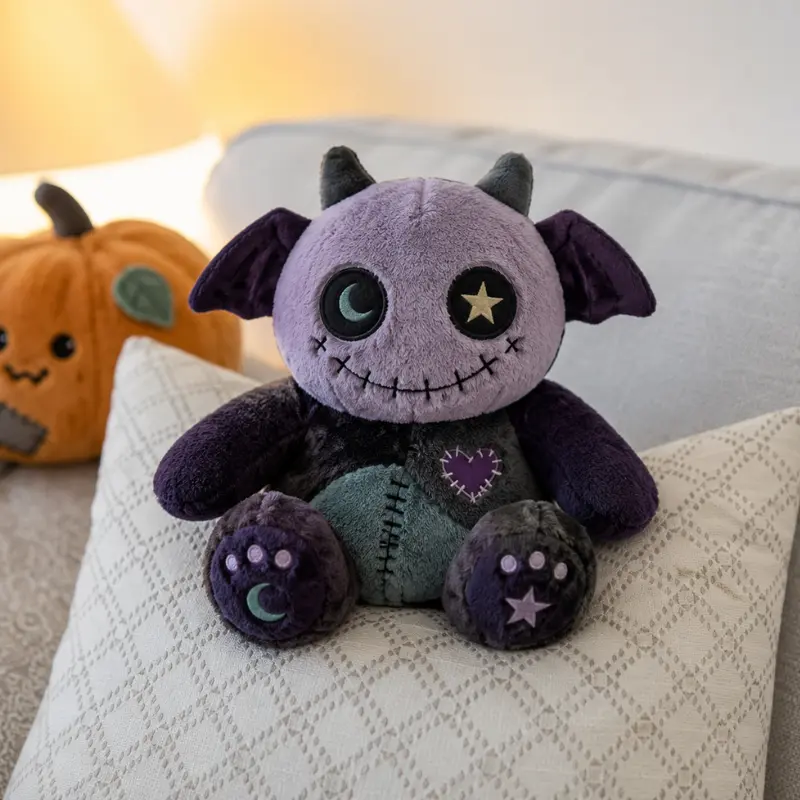
First, let’s get one thing straight: toddlers don’t care about “bag design.” They care about sticking everything in their mouth—their fingers, a cheerio, a loose button, that crumb from yesterday’s snack that’s hiding in the couch. The biggest safety risk with any baby product, plush or otherwise, is small parts that can come loose. I learned this the hard way early on. Our very first plush unicorn bag had tiny glitter eyes stitched on with thin nylon thread. A parent sent me a photo six months later of a child holding one of those eyes, and she looked terrified. She told me her toddler had pulled the eye free at the grocery store, and she’d only noticed when he started choking on it at home. That day, I pulled every unicorn bag from store shelves, scrapped the glitter eyes, and invested in custom, double-layered fabric appliqués stitched with high-tensile strength polyester thread.
Not all threads are created equal, by the way. Toddlers are rough on their bags—they drag them, trip over them, yank them off stroller handles. Regular thread can fray in a month, turning into little loops that a curious toddler can pluck and chew. At our shop, we use bonded polyester thread, the same kind used for outdoor upholstery. It’s thick, it resists fraying, and it can handle 10 pounds of tension before it snaps—way more than a toddler’s chew or yank. We also test every seam with a “tug test” that’s way more intense than any kid could manage. I have a little machine in the workshop that yanks each side of the bag with steady pressure, and we only ship it if it holds for 10 full seconds. That’s how we eliminated the risk of a whole seam splitting open and spilling all the stuffing into a kid’s lap.
Next, fabric choices. This is where a lot of cheap plush bag brands cut corners, and it’s the part that keeps pediatricians up at night. Not all “plush” fabric is the same. There’s the cheap, scratchy microfiber that sheds tiny fibers like crazy—stuff that, when inhaled, can irritate a toddler’s tiny lungs. There’s also “super soft” fabric that’s actually made with low-quality polyester that leaches chemicals when it’s washed, or when a toddler chews on it. For our bags, we use 100% OEKO-TEX Standard 100 certified organic polyester plush. Wait, I know organic polyester sounds like an oxymoron, but it means the fabric is made from recycled plastic bottles that are processed without harmful dyes or chemicals. We run our fabric through a gas chromatography test every batch to make sure there’s no formaldehyde, phthalates, or lead in the fibers. Toddlers have skin that’s way more sensitive than adults’—their skin is 20% thinner than ours, so even a tiny amount of a harsh chemical can cause a rash or irritation. I’ve seen kids with contact dermatitis from cheap plush backpacks that had unwashed dyes seeping into the fabric, and I made a promise early on that our bags would never do that to a child.
Stuffing is another big one. Most plush bags are filled with standard polyester fiberfill, but not all fiberfill is toddler-safe. Cheap fiberfill is made with small, low-density pieces that can be pulled apart easily, and if a toddler swallows a handful, that’s a choking hazard. Our stuffing is high-loft, medical-grade polyester fiberfill. It’s dense, it’s made to stay in place, and it doesn’t clump or shed tiny pieces. We also line the inside of every plush bag with a thin, breathable cotton lining—something most other plush backpack skips because it adds a little to the cost. That lining keeps the stuffing from pushing through the outer plush fabric, and it also gives the bag a smooth, soft inside so it doesn’t scratch a toddler’s back when they wear it. Speaking of wearing: shoulder straps. Toddlers have tiny shoulders, so thin straps can dig in and cause pain, especially if the bag is holding things like sippy cups or crackers. Our straps are made with the same plush fabric as the bag body, and they’re double-layered with a foam core for cushioning. We size them to fit kids ages 1 to 4, so they’re not too long, and we add adjustable buckles that are spring-loaded—meaning a toddler can’t undo them on their own, but a parent can loosen them easily. We also test the buckles for pinch resistance, because nothing is more frustrating than a toddler’s finger getting squeezed when they’re trying to put their bag on.
Wait, what about the “plush” factor for sensory play? A lot of parents buy plush bags because they’re soft and great for toddlers who like to touch and explore. But here’s the thing: sensory toys still have to be safe. We don’t add any loose trinkets to our bags—no bells, no ribbons, no fabric patches with sequins. Sequin patches are a huge no-no for toddlers, right? They’re just small plastic discs that can be pulled off and choked on. We’ve seen way too many reports from the Consumer Product Safety Commission about choking hazards from sequined kids’ bags. If a parent wants a little extra sensory stimulation, we integrate textured elements into the main plush fabric—like a subtle ribbed pattern on the sides, or a small embroidered shape that’s stitched down all the way around. Those are safe, they can’t come loose, and they give a toddler something interesting to look at and feel without any risk.
I know some parents will say, “But my toddler chews on everything, even the safest fabric. Is plush bag fabric safe to chew on?” Great question. Chewing is how toddlers explore the world, and it’s a normal part of their development. Our plush fabric is non-toxic, so if a toddler licks or chews on it, they’re not ingesting harmful chemicals. But we also design our bags to withstand chewing. The outer fabric is tear-resistant, so it won’t rip if a toddler gnaws on it for 10 minutes. The stitching is strong enough that even the most determined chewer can’t pull threads loose. That said, I always tell parents to supervise their toddler when they use any bag, plush or otherwise. No product is 100% hazard-proof, and it’s better to err on the side of caution. I also recommend washing plush bags every two weeks, because toddlers get them dirty, and even the safest fabric can harbor bacteria if it’s not cleaned regularly. We test our fabric for wash durability—we wash each bag 20 times on high heat to make sure the colors don’t fade, the stitching doesn’t fray, and the fabric doesn’t start to shed. If it doesn’t pass, we send it back to the workshop and adjust the dye or thread.
Let’s talk about common myths about plush bags and toddlers. The biggest one I hear is “plush bags trap bacteria and mold because they’re fuzzy.” That’s only true if you don’t clean them regularly. Smooth nylon backpacks can get moldy too, if they’re left wet in a diaper bag or a closet for days. Our plush fabric is tightly woven, so it doesn’t absorb moisture like cheaper, looser plush. It dries in a couple of hours if it gets spilled on, which means mold and bacteria don’t have time to grow. Another myth: “plush bags are too heavy for toddlers to carry.” Our plush bags for toddlers are lightweight—most weigh less than 4 ounces, about as much as a small smartphone. That’s less than the weight of a sippy cup and a snack, so a toddler can carry it around without straining their back or shoulders. We don’t design our bags to hold full schoolbooks, obviously—they’re for stuffed animals, sippy cups, little toys, and snack items, which is exactly what toddlers should be carrying.
I’ve had so many conversations with parents over the years that have shaped how we make our bags. Last year, a mom came into our workshop with her 2-year-old, who had a mild allergy to synthetic fabrics. She told me she’d tried three different plush bags, and each one had caused a rash on her son’s neck. We switched up our fabric that month: we added a thin inner lining of GOTS-certified organic cotton, which is even gentler on sensitive skin, and we made sure all the outer fabric was free of any synthetic additives that could trigger allergies. That small tweak made a huge difference—we got dozens of emails from parents saying their kids with eczema or sensitive skin could finally use a plush bag without irritation.
Another thing I want to mention: third-party testing. I can say our bags are safe all day, but parents want proof. Every batch of our plush bags is tested by an independent, accredited lab that specializes in children’s product safety. They test for chemical content, small parts hazards, tear resistance, and fabric durability. We get a full report for every batch, and we make those reports available to any customer or retailer who asks. I know a lot of small plush bag suppliers skip this step to save money, but it’s non-negotiable for us. If we cut corners on testing, we’re putting kids at risk, and that’s not a line I’ll cross.
At the end of the day, the question of whether plush bags are safe for toddlers isn’t a yes or no answer—it’s about how they’re made. Cheap plush bags with loose trimmings, low-quality fabric, and weak stitching are definitely a safety hazard. But when they’re made with certified, non-toxic materials, reinforced stitching, no small parts, and tested for durability, plush bags are actually a great option for toddlers. They’re soft, they’re fun, they encourage kids to carry their own things, and they help build independence at a young age.
I started this business because I had a toddler of my own, and I was frustrated by how few safe, well-made plush bags were on the market. Every time I see a photo of a toddler grinning with their new plush bag, running around the playground with their stuffed teddy inside, that’s why I do this. We’re always working on new designs—animal-shaped bags, character-themed bags, bags with extra pockets for snacks. If you’re a parent looking for a safe plush bag for your toddler, or if you’re a retailer interested in partnering with a supplier who prioritizes child safety above all else, we’d love to connect. We work with families, daycare centers, and small retail partners, and we can customize bags to fit your needs.

As we grow, we’re still learning, still testing, still making tweaks to every part of our process. Safety isn’t a one-time check—it’s something you have to do every single day, every single batch. For anyone who’s ever worried about whether a plush bag is safe for their toddler, I hope this helps: choose a supplier that’s transparent about their materials, that does third-party testing, that’s willing to answer all your questions, and that doesn’t cut corners. That’s what we are, and that’s what we’ll keep being.
Unicorn Plush Toys References:
- Consumer Product Safety Commission. (2022). Choking Hazards from Children’s Products. U.S. Consumer Product Safety Commission.
- OEKO-TEX Association. (2023). Standard 100 by OEKO-TEX: Testing and Certification for Textile Products. OEKO-TEX International.
- American Academy of Pediatrics. (2021. Product Safety Guidelines for Toddler and Preschool-Aged Children. American Academy of Pediatrics.
- Textile Institute. (2022. Safety Standards for Children’s Textile Products. The Textile Institute.
Shenzhen Newhorse Toys Co., Ltd.
Shenzhen Newhorse Toys Co., Ltd. is one of the most professional plush bags manufacturers and suppliers in China. We have world-leading production equipment and strong manufacturing capabilities. Please feel free to buy bulk plush bags at competitive price from our factory. Welcome to contact us for quotation and free sample.
Address: Room 101, Building 2, Fuguangyuan Factory, No.105 Longhu Road, Longdong Community, Baolong Subdistrict, Longgang District,Shenzhen,Guangdong, China
E-mail: info@newhorsetoys.com
WebSite: https://www.newhorsetoys.com/
