If you’ve ever stood next to a fixed solar mount array on a bright, midday day, squinting as sun glint bounces off the panels at a perfect angle—more than likely, that array is set to the exact latitude of its installation site. For anyone in the solar space, that’s a basic rule of thumb, right? But here’s the question we get in our Other Photovoltaic Accessories shop at least a dozen times a week: do I need tilt accessories for those fixed mounts, even if I set them to latitude? The short answer? It depends—on your location, your energy goals, the season, and even how much extra effort you’re willing to put in. Let’s break this down like we would for a regular customer walking through our showroom, no overly technical jargon, just real-world, data-backed insights from someone who’s worked with solar gear for years. Other Photovoltaic Accessories
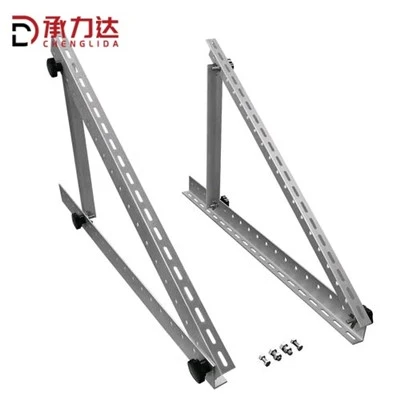
First, let’s get clear on what fixed mounts actually are, and why they’re popular. Fixed mounts are the workhorses of residential and small commercial solar setups—they’re cheap, easy to install, require almost no maintenance, and don’t have moving parts that can wear out in extreme weather. Most installers default to setting the tilt angle equal to the site’s latitude because that’s the angle that captures the most sun over the entire year. But that’s an average, not a one-size-fits-all solution. Tilt accessories, the ones that let you adjust the angle of your panels throughout the year, change that math.
Let’s start with seasonal yield, because that’s where a lot of people miss the mark. If you live in a place with distinct seasons—say, the Northeast U.S., or parts of Europe, or even parts of China where winters are long and dark—your sun path shifts drastically. In the summer, the sun is high in the sky, so a panel tilted at 40 degrees (for a 40-degree latitude) might be getting too much direct overhead sun, which can even cause slight efficiency losses if the panels overheat a tiny bit. In the winter, the sun is low on the horizon, so that same 40-degree angle doesn’t catch as much of that low winter sun as it could. A 2022 study from the National Renewable Energy Laboratory (NREL) found that for a fixed tilt set to latitude, annual energy production is about 10-15% lower than if you adjust the tilt twice a year (summer vs. winter). Wait, 10-15%? That’s a big number for someone paying for solar—enough to cover a few extra months of utility bills, or even a small portion of the system’s cost over its 25-year lifespan.
But here’s the catch: that 10-15% gain only applies if you adjust the tilt twice a year. If you leave it set to latitude year-round, you’re leaving a lot of potential on the table. What if you don’t want to mess with adjusting panels every spring and fall? Then maybe seasonal tilt accessories are worth it, but if you’re fine with never touching the mounts, fixed latitude tilt is still a solid choice. We’ve had customers in northern states swear by adjusting their tilt in March and September—they say the extra energy pays for the small cost of the accessories in less than two years. Customers in the Southeast U.S., though, where summer is hot and long, often don’t bother: they tell us the small gain from tilting in summer is erased by the hot weather making panels less efficient, so it’s not worth the hassle.
Next up, weather and extreme conditions. Tilt accessories aren’t just for increasing energy yield—they can also help with maintenance and durability. Wait, how? If you have panels set at a fixed angle, especially a shallow one for summer, dust, leaves, snow, or even bird droppings can collect on the lower half of the panel, blocking sunlight. Adjusting the tilt to a steeper angle in the winter helps snow slide off much faster—we’ve had customers in mountainous regions tell us they used to have to shovel panels every few days in winter, but with a simple tilt adjustment, the snow melts off in a day or two. That’s a huge win in areas with heavy snow, because covered panels produce zero energy, so waiting for snow to melt off a fixed mount can cost you weeks of production.
But what about wind? A lot of people worry that adding tilt accessories will make their mounts less stable, more likely to bend or break in high winds. That’s a valid concern—we’ve seen cheap, flimsy tilt parts from no-name suppliers that can fail in wind speeds over 60 mph. But if you get high-quality tilt accessories designed specifically for fixed solar mounts, tested to withstand local wind codes, they’re every bit as stable as a fixed mount. We’ve supplied tilt kits to customers in Texas, where wind storms are common, and not a single one has reported issues. The key is matching the tilt accessory to your location’s wind load requirements—for areas with 90+ mph winds, you need heavy-duty brackets, not the lightweight ones made for mild climates.
Now, let’s talk about the flip side: when tilt accessories aren’t worth it. If you live near the equator, for example, where the sun is almost directly overhead year-round, the fixed latitude tilt is perfect—seasonal changes are minimal, so adjusting tilt won’t give you much of a gain. A small island in the Caribbean, or parts of Indonesia, that’s the case there. Also, if you have a small system, like a 2-panel setup for a tiny home, the cost of tilt accessories might be more than the extra energy you’ll produce over the life of the system. For those small setups, fixed mounts are just simpler and cheaper.
Another factor: if your primary goal is to maximize summer energy, say, because you run a pool or have high AC bills in the summer, then tilting your panels to a steeper angle in summer (not equal to latitude) will give you more summer production. If you care more about winter energy, tilt steeper in winter. Fixed latitude tilt is a middle ground—good for all seasons, great if you want to not have to adjust anything. Tilt accessories let you customize for your specific needs.
Wait, let’s also address a common misconception: some people think that tilt accessories are only for large commercial systems. No, we sell tilt kits for residential mounts too—small, easy-to-install ones that a handy homeowner can put together in an afternoon, no contractor needed. They’re not just for big arrays. We recently sold a set to a customer in Ohio who has a 10-panel system; he put the tilt kit on over a weekend, adjusted it in March and September, and told us his energy production went up about 12%, which was enough to add a whole extra month of zero utility bills each year. That’s the kind of real result that makes our job worth it, not just the sales.
Now, let’s get into the nitty-gritty of what tilt accessories actually are, in case you’re not familiar. Most tilt kits for fixed mounts include adjustable brackets that replace the fixed angle brackets, a few extra fasteners, and sometimes a simple spirit level to make adjusting easy. Some kits let you adjust the angle in 5-degree increments, others in 10, so you can tailor it exactly to your needs. There are also manual tilt kits, which you adjust by hand a couple times a year, and even some motorized tilt kits, though those are more for larger commercial systems, and they cost more. Motorized kits are nice if you want to adjust the angle automatically based on the sun’s path, but they’re overkill for most small to mid-sized residential systems.
We often get asked: what’s the ROI on tilt accessories? Let’s do a quick rough calculation. Suppose your system is a 5kW system, producing about 6,000 kWh a year, at a utility rate of $0.15 per kWh. A 12% yield gain from adjusting tilt would be 720 extra kWh a year, worth about $108 a year. A good manual tilt kit for a 5kW system costs around $150, so you’ll pay that off in less than two years, and then you’re pocketing that $108 a year for the next 20+ years. That’s a solid ROI, way better than a lot of other small home upgrades. But if you live in a place with mild seasons, like Southern California, where the difference between summer and winter sun is small, the yield gain might be only 3-5%, so the ROI is longer, maybe 5 years, which is still worth it if you plan to stay in your home for a while.
Of course, every installation is different. If you have shading on your array, that changes things too—tilting can help panels avoid shading from trees or neighboring buildings, but only if the shade is seasonal. If you have permanent shading, tilt won’t fix that, no matter what angle you set. That’s why we always ask customers about their specific site conditions when they reach out to us for advice.
Another thing to consider: warranty. Some solar panel manufacturers have requirements for tilt angle, but most just require that the mount is installed to code, so adjusting it with a compatible tilt accessory won’t void your panel warranty. That’s a common fear, so it’s good to check with your panel supplier, but from what we’ve seen, adjusting tilt is not a warranty issue. We’ve never had a customer come back to us saying their warranty was voided because of a tilt kit.
So, putting this all together, do you need tilt accessories for fixed solar mounts? The answer is: not necessarily, but they might be a great investment depending on your situation. If you live in a region with distinct seasons, want to boost your energy yield, don’t mind a tiny bit of seasonal adjustment, and can afford a kit with a stable design, then yes, tilt accessories are worth it. If you live near the equator, have a small system, or want zero maintenance, then fixed mounts set to latitude will work perfectly for you.
At the end of the day, our job as an Other Photovoltaic Accessories supplier isn’t just to sell you gear—it’s to help you make the best decision for your specific setup. We’ve seen customers go both ways: some added tilt kits and saved hundreds over the years, some stuck with fixed mounts and never regretted it. The key is weighing your priorities: energy gain, maintenance effort, cost, and location.

If you’re not sure which path is right for you, don’t hesitate to reach out to our team to discuss your project. We can help you calculate potential yield gains, recommend the right tilt accessories or fixed mounts for your climate, and make sure you get a setup that works for you for years to come.
PV Guide Rail References
National Renewable Energy Laboratory. (2022). Tilt Angle Optimization for Fixed-Tilt Solar Photovoltaic Systems. U.S. Department of Energy.
International Code Council. (2021). International Residential Code for One- and Two-Family Dwellings, Chapter 12: Solar Energy Systems.
Solar Energy Industries Association. (2023). Best Practices for Fixed Solar Mount Installation and Maintenance.
Wuxi Chenglida Machinery Co., Ltd.
We are one of the most professional photovoltaic accessories manufacturers and suppliers in China, also support customized service. Please feel free to buy durable photovoltaic accessories made in China here from our factory. Quality products and reasonable price are available.
Address: No.4 Ruifeng Road, Huishan District, Wuxi City
E-mail: postmaster@wxcldjx.com
WebSite: https://www.wuxi-chenglida.com/
