If you’ve ever stared at a smooth, edge-to-edge curved phone screen, a sleek curved TV, or even a curved monitor that wraps just a little around your field of vision, you might’ve wondered how those aren’t just flat pieces of glass. As a screen making machine supplier who’s chatted with dozens of gadget makers over the years, let me break down exactly what a curved screen making machine is—no fancy jargon, just the real deal. Screen Making Machine
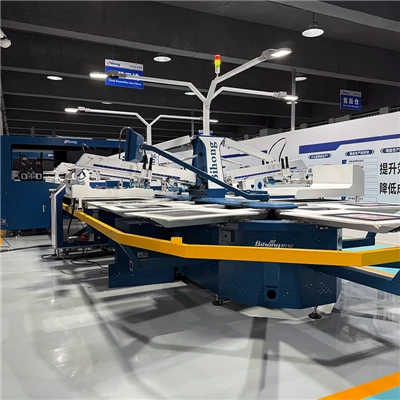
First off, it’s not just a “machine that bends glass.” Flat screen machines do their job, obviously, but curved ones are built to handle the specific pain points of making a screen that’s not level. Let’s start with the basics: raw glass for screens is super thin (like, for phones, it’s often 0.3mm or less thick) and if you bend it wrong, it cracks, leaves weird uneven spots, or ruins the display layer on top. A curved screen making machine solves that with steps tailored to every part of the process.
I’ve had customers come to me saying, “Why can’t we just heat a flat glass and bend it by hand?” Nope, that’s a recipe for disaster. Hand bending means uneven pressure, which leads to tiny stress fractures that break the screen the second it gets dropped. Curved machines automate and control every force—temperature, pressure, bend angle—so every piece comes out the same, no matter how many you make. That’s non-negotiable for mass production, right?
Let’s walk through how these machines actually work, because it’s cooler than it sounds. First, there’s the glass loading stage. Thin glass is fragile, so most machines use suction cups that are calibrated to lift it without scratching or warping it even a tiny bit. From there, it moves into the forming chamber—this is where the magic happens. Some machines use a vacuum forming method: the flat glass is placed over a curved mold, and the chamber pulls all the air out, so atmospheric pressure pushes the glass onto the mold’s shape. That way, the bend is super smooth, no creases. Other machines use heat bending: they heat the glass to just below its melting point (so it’s soft enough to bend, not so hot it sags out of shape) and then apply precise pressure from both sides to get the exact curve needed.
Wait, but curved screens aren’t just glass—they have touch layers, polarizers, and OLED or LCD panels all layered on top. Oh right, a lot of people forget that part. So a modern curved screen making machine isn’t just for forming the glass. It also has integrated steps for aligning those layers so they don’t shift when the glass is curved. If the touch layer is off by even a millimeter, your tap won’t register right. I’ve seen cheap machines skip that alignment part, and customers end up with a 10% defect rate because every other screen has a wonky touch sensor.
Then there’s the testing stage built into most good machines. Once the screen is bent, the machine automatically runs a quick check for stress cracks, uneven thickness, and display defects. A lot of lower-end machines make you move the screen to a separate tester, which slows production way down. Our machines cut that time in half because testing is part of the line—more screens made, less wasted time.
Now, who actually uses these things? Not just big phone brands. We sell to tablet makers who make curved e-readers, TV manufacturers pushing large curved screens, even car companies that want curved displays for dashboards. Cars are a big one right now—they’re ditching flat stacks of screens and going for curved panels that wrap around the driver, and those need consistent curves that fit the car’s interior perfectly.
I get asked a lot, “Is a curved screen machine just a special flat screen machine?” Short answer: no. Flat screen machines are made for uniformity on a level surface, so they use different molds, different heating systems, and don’t handle the precision needed for curves. Trying to use a flat machine for curved screens will leave you with tons of broken glass and unusable products. It’s like trying to use a pizza roller to make a tortilla—same idea, but the details are totally different.
Another thing people don’t talk about: maintenance. Curved screen machines have a lot of small parts (the molds, suction cups, pressure valves) that need regular checks. A good supplier—cough yours truly—will walk you through how to keep those parts working, because a broken suction cup one day can mess up 50 screens if you don’t catch it. We also do firmware updates for the machines as new screen sizes come out, which is way easier than buying a whole new machine every time your customer wants a bigger curved TV.
Wait, let’s address the “why curved?” part too, because that ties into why these machines are in demand. Curved screens aren’t just a gimmick. For phones, they make it easier to reach the edges of the screen without stretching your thumb. For TVs, the curve wraps around your eyes so the whole screen feels more immersive, less flat. For cars, they cut down on glare because the curve reflects light away from the driver’s eyes. All of that adds up to more demand for curved screens, which means more need for reliable curved screen making machines.
I’ve had a customer who runs a small custom monitor brand tell me he started with a $10k used curved machine and spent 6 months fixing it, wasting a ton of glass. Then he upgraded to one of ours, and his defect rate went from 18% to 2% overnight. That’s the kind of difference these machines make. They’re not just metal boxes—they’re the thing that turns a design on a computer into a screen people actually use.
Now, if you’re a gadget maker, a car interior designer, or anyone looking to get into curved screen production, you probably have questions: What size curved screen can this machine handle? Can it do multiple curves for different products? How much glass does it waste during setup? The short answer is, no two operations are the same, so you need a machine that can be adjusted to your specific needs. A lot of suppliers try to sell you a one-size-fits-all, but the best ones will ask about your product size, your production volume, and what defects you’re trying to cut down on before they recommend anything.
I’ve worked with small startups that make curved smart mirrors (yep, those exist) and big electronics giants making curved gaming monitors. Every time, the process is similar, but the machine tweaks are different. That’s why I always tell people not to go for the cheapest option—you’ll end up paying way more in wasted material and repairs down the line.
If you’re ready to level up your production with a curved screen making machine, or just want to pick my brain about what would work for your specific line, feel free to reach out. No pressure, no sales pitch that’s too hard to follow—just honest answers about what these machines can do, what they can’t, and how they’ll save you time and money.
Embroidery Digital Printer References:
- “Thin Glass Forming Technologies for Curved Display Applications,” Journal of Display Technology, 2021.
- “Mass Production of Curved LCD Screens: Process Optimization and Defect Reduction,” International Display Manufacturing Conference, 2019.
- “Automated Curved Screen Assembly: Alignment and Testing Methods,” IEEE Transactions on Components, Packaging and Manufacturing Technology, 2022.
Guangdong Aces Machinery Co., Ltd.
Guangdong Aces Machinery Co., Ltd. is one of the most professional screen making machine manufacturers and suppliers in China. We are committed to providing high quality equipment made in China with low price. If you’re going to buy durable screen making machine, welcome to get pricelist from our factory. Customized orders are welcome.
Address: 701, Building 5, Liandong U Valley, No.8 Zhixin 1st Road, Dagang Town, Nansha District, Guangzhou City, Guangdong Province, China.
E-mail: jessie@bhprinter.com
WebSite: https://www.bihongprinter.com/
