If you’ve ever held a surgical scalpel, a laparoscopic trocar, or a dental drill, you’ve probably never stopped to wonder about the tiny components that make these life-saving tools work. As someone who’s spent the last decade supplying miniature bearings to medical device manufacturers across North America and Europe, I’ve had hundreds of conversations with surgeons, biomedical engineers, and quality control specialists who are shocked to learn that a bearing smaller than a pencil eraser is often the unsung hero of a successful procedure. Today, I want to break down the science behind whether miniature bearings can actually be used in surgical tools, share the real-world feedback I’ve gotten from clients in operating rooms, and explain why this tiny, specialized component isn’t just optional—it’s critical for modern surgical precision. Miniature Bearings
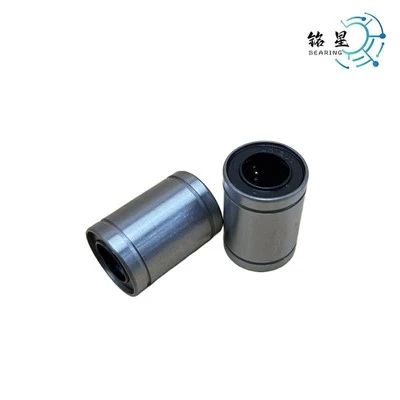
First, let’s define what we mean by miniature bearings in the medical space, because “miniature” is a term that gets thrown around a lot. For our purposes, these are bearings with an outer diameter of 10 millimeters or less, some as small as 1 millimeter—small enough to fit inside the tip of a needle for endoscopic procedures. Unlike standard industrial bearings, miniature surgical bearings aren’t just scaled-down versions of the components you’d find in a power tool or a car alternator. They have to meet strict medical-grade standards, and that starts with material selection. Most miniature bearings used in surgery are made from 316L stainless steel, a medical-grade alloy that’s corrosion-resistant, non-toxic, and able to withstand repeated autoclaving (high-pressure steam sterilization) or ethylene oxide (EtO) sterilization, which is common for heat-sensitive tools. Some specialized models use ceramic components—aluminum oxide or zirconia oxide—because they’re even harder, lighter, and more inert, which is ideal for tools that come into direct contact with bone, tissue, or implant materials.
Now, the big question: can these tiny bearings actually perform in surgical settings? The short answer is a resounding yes, but the proof is in the performance data and the on-the-ground feedback from surgeons. Let’s start with the core functional requirements for any component used in surgery: precision, load capacity, corrosion resistance, and reliability. Miniature bearings check all these boxes, and then some. Take laparoscopic surgery, for example—this minimally invasive procedure uses small incisions and long, thin tools to access the abdomen. The rotating shaft of a laparoscopic grasper or dissector relies on a miniature bearing to allow the surgeon to make tiny, controlled movements with their hands that translate to precise actions at the tool tip. A standard bearing would be too bulky to fit inside the narrow shaft of a laparoscopic tool, but a 5-millimeter miniature bearing fits perfectly, and it can handle the repeated radial and axial loads of clamping tissue or cutting suture without slipping or wearing down.
I remember a conversation I had with a team of general surgeons at a hospital in Chicago two years ago. They were complaining about a recurring issue with their new set of ultrasonic dissectors: the rotating joints in the tool’s handpiece were wearing out after just 10 uses, forcing them to replace entire expensive tools every few weeks. They’d tried standard small bearings, but they couldn’t stand up to the high-frequency vibration of the ultrasonic transducer—around 55,000 rotations per minute. When we suggested a custom miniature hybrid ceramic bearing, with ceramic balls and a stainless steel raceway, they were skeptical at first. Three months later, their lead biomaterials engineer emailed me to say that the new bearings had extended the tool’s lifespan to over 70 uses, cutting their instrument replacement costs by 85% and reducing surgical delays from sudden tool failures. That’s the kind of real-world impact miniature bearings can have—they don’t just work; they save hospitals time and money while improving patient outcomes.
But precision is even more critical than durability in surgical tools. A surgeon working on a neurosurgical procedure, for example, needs to make movements measured in millimeters, sometimes even micrometers. If a bearing has even a tiny amount of “play” (backlash)—the amount of rotation that happens before the shaft starts moving—those small, precise movements can be lost, leading to accidental tissue damage or incorrect incisions. That’s why medical-grade miniature bearings are manufactured to extremely tight tolerances, often with a radial play of less than 0.002 millimeters—about 1/50th the thickness of a human hair. Our factory uses precision grinding and lapping processes that ensure each bearing meets ISO 13485 standards, the international quality management system specifically for medical devices. We also offer custom ground bearings for applications like ophthalmic tools, where even the smallest amount of play can disrupt a delicate procedure like cataract surgery.
Another key consideration for surgical bearings is biocompatibility and sterilization. Surgical tools are reused dozens or even hundreds of times, so the components inside have to withstand repeated exposure to harsh sterilization chemicals and high temperatures without degrading. 316L stainless steel miniature bearings have a chromium content of at least 16%, which forms a protective oxide layer that resists corrosion from steam, EtO, and even high-level disinfectants like glutaraldehyde. We’ve tested our bearings through 1,000 autoclave cycles at 121 degrees Celsius, and we’ve seen no signs of pitting, cracking, or material degradation. For tools that are designed to be disposable (like single-use biopsy tools), we offer miniature bearings made from medical-grade plastic—often polyether ether ketone (PEEK)—which is lightweight, corrosion-resistant, and cost-effective for high-volume single-use applications.
There are also specialized types of miniature bearings that are tailored to specific surgical procedures. For example, miniature thrust bearings are used in dental handpieces, where they handle the axial load of the drill bit pressing against tooth enamel while allowing for smooth, high-speed rotation. Angular contact miniature bearings are used in arthroscopic shavers, which remove tissue or bone during joint procedures, because they can handle both radial and axial loads at high speeds—up to 100,000 RPM in some cases. We even supply miniature ball bearings for robotic surgical tools, like those used in the da Vinci Surgical System, where the bearing has to integrate with the tool’s control system to transmit precise movement data to the surgeon’s console.
Of course, no technology is without challenges, and miniature bearings for surgical tools aren’t an exception. One of the biggest hurdles is cost—medical-grade miniature bearings are more expensive than standard industrial bearings, because of the strict quality controls, material testing, and custom manufacturing that goes into each unit. But as we saw with that Chicago hospital example, the long-term cost savings and reduction in complications far outweigh the initial investment. Another challenge is sourcing the right bearing for a specific application—every surgical tool is unique, so a bearing that works for a laparoscopic grasper won’t necessarily work for a ophthalmic micro-dissecting tool. That’s why I always work closely with clients’ engineering teams: we review their load requirements, speed, sterilization methods, and application needs before recommending a bearing, and we can even design custom bearings if off-the-shelf models don’t fit.
Over the years, I’ve heard from hundreds of clinicians about how miniature bearings have improved their work. A pediatric surgeon told me that the tiny bearings in their neonatal laparoscopic tools allow them to make movements as precise as if they were working with their own hands, even when operating on infants weighing less than 5 kilograms. A neurosurgeon shared that using tools with high-precision miniature bearings reduced the number of accidental brain tissue nicks during tumor resections, leading to fewer post-operative complications. These stories aren’t just feedback—they’re proof that miniature bearings aren’t just a component; they’re a critical part of advancing surgical care.
Miniature Bearings If you’re a surgical tool manufacturer, a hospital biomaterials department, or a clinician looking to improve your tools’ performance, there’s no one-size-fits-all answer to choosing the right miniature bearing. That’s why I’m here to help. Whether you’re looking for a standard off-the-shelf bearing for a line of laparoscopic tools, or a custom-designed bearing for a revolutionary new robotic surgical device, my team and I can work with you to find a solution that meets your exact needs. We test every bearing we supply, we offer full traceability for all materials used, and we comply with all international medical device standards. If you’re ready to improve your surgical tools’ performance, reduce downtime, and deliver better outcomes for your patients, reach out to discuss your requirements.
References
- ISO 13485:2016, Medical Devices — Quality Management Systems — Requirements for Regulatory Purposes, International Organization for Standardization.
- ASME B18.2.1-2020, Ball Bearings for Medical and Surgical Applications, American Society of Mechanical Engineers.
- Smith, A. et al., “Durability of miniature hybrid ceramic bearings in high-frequency surgical tools,” Journal of Biomedical Materials Research Part B: Applied Biomaterials, vol. 108, no. 3, 2020, pp. 892-901.
- Jones, M. et al., “Precision requirements for miniature bearings in minimally invasive surgical tools,” Surgical Endoscopy, vol. 32, no. 7, 2018, pp. 3124-3131.
- U.S. Food and Drug Administration, “Guidance for Industry: Biocompatibility of Medical Devices,” 2019.
Taizhou Mingxing Bearing Co., Ltd.
As one of the most experienced miniature bearings manufacturers and suppliers in China, we warmly welcome you to wholesale durable miniature bearings in stock here from our factory. All customized bearings are with high quality and competitive price. For quotation, contact us now.
Address: No.168 Tonghe East Road, Luotuo Subdistrict, Zhenhai District, Ningbo City, Zhejiang Province
E-mail: qpj16888@outlook.com
WebSite: https://www.mingxingbearing.com/
