When I first started out as a flatbed laser cutter supplier, I lost more than a few potential customers who’d mix up a co2 laser cutter with the machines we build. Most would walk into my workshop, squint at the heavy aluminum beds covered in protective film, and ask, “Can this cut 10mm acrylic? I’ve used a co2 laser at a friend’s shop and it worked fine.” It took me years to realize the confusion isn’t just about the machines—it’s about what each one is actually designed to do, who they serve, and why picking the right one can make or break a small business or a large manufacturer’s entire production line. Flatbed Laser Cutting Machines
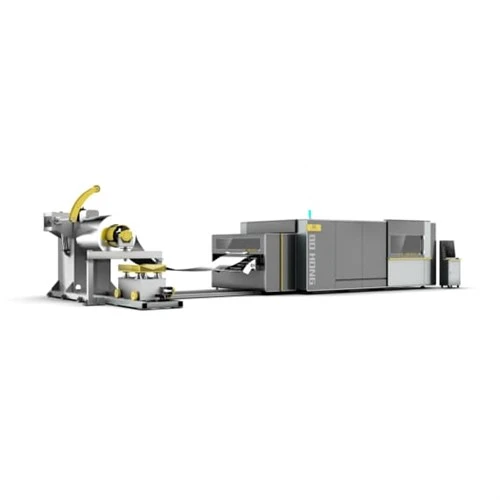
Let’s start with the basics, no confusing jargon, just what I’ve learned from walking new customers through a demo and troubleshooting 100+ machine setups last year. A co2 laser cutter has a resonator that pumps a mix of carbon dioxide, nitrogen, and helium gas through a sealed tube. When electricity zaps that gas, it produces infrared light at a 10.6 micrometer wavelength—perfect for cutting and engraving organic materials. It’s the workhorse you’ll find in high school shop classes, small sign shops, and home workshops because it’s relatively affordable, easy to operate, and handles thin to medium stock like a dream. A flatbed laser cutter, on the other hand, is a frame-based machine that mounts a laser head (or heads) to a gantry system that slides left and right, while the bed holds material stationary for cutting. Wait, but hold on—some people say flatbed is just another name for co2, and that’s exactly the mix-up I’m talking about. That’s the first difference: flatbed is a machine configuration, not a laser type. Co2 is a laser source type. A flatbed laser cutter can be fitted with a co2 laser, but it can also use fiber lasers, diode lasers, and even newer hybrid sources—all with different strengths. That’s the core of the confusion, and it’s what trips up everyone from new makers to production managers.
Let’s break down use cases because that’s what actually matters to anyone buying one. If you’re a sign maker cutting thin acrylic, wood, or leather for custom storefronts, a co2 laser cutter is probably your go-to. I sold three co2 systems to a local sign company last quarter, and they told me they use them for 90% of their daily work: 2mm acrylic letters, thin plywood for interior signage, even thin fabric for event backdrops. The co2’s 10.6μm wavelength is absorbed easily by those non-metallic, organic materials, so it cuts cleanly with minimal charring on thin stock. But here’s where the line blurs, and where my flatbed machines shine. If that same sign company suddenly lands a big job: 12mm thick acrylic signs for a mall’s new wing, or metal nameplates with a brushed finish, the co2 cutter they own will struggle. A co2 laser can cut thin metal, but it’s slow, requires a lot of power, and will leave a rough, oxidized edge. A flatbed system fitted with a fiber laser source (one of the most common setups for industrial flatbeds) will cut that same 12mm acrylic in a third of the time, smooth as glass, and handle steel, aluminum, and brass with precision. Last year, I worked with a furniture maker who switched from a co2 to a flatbed laser cutter to cut 20mm solid oak for table tops. The co2 took 20 minutes per table’s edge detail, while the flatbed cut it in 7 minutes, with no need for sanding down charred edges. That’s not a minor upgrade—that’s a 65% increase in daily output.
Next, material compatibility, the make-or-break point that I always walk customers through on a test cut. Co2 laser cutters are non-ferrous focused, basically. They work on any material that’s organic or non-metallic: acrylic, wood, leather, fabric, paper, foam, even some thin plastics. They can cut thin steel, but as I mentioned, it’s inefficient and the edge quality is poor. The wavelength just doesn’t interact well with dense metal. Flatbed systems, because they can swap laser sources, are far more versatile. A flatbed cutter can have a co2 tube for wood and acrylic, a fiber laser for metal, a diode laser for precise engraving on glass or plastic, or even a hybrid setup with both co2 and fiber heads for jobs that need cutting both acrylic and steel on the same run. I had a client in the automotive parts industry who needed to cut 3mm rubber gaskets and 1.5mm aluminum brackets for their assembly line. A single co2 machine would have cut the rubber fine but struggled with the aluminum; two separate machines would have taken up half their workshop floor. They bought a dual-source flatbed system from us last spring, and now they run both parts on one machine, cutting their setup time by 4 hours a day. That’s the kind of flexibility you can’t get with a standard co2 cutter.
Now, power and speed, which ties directly to cost and production volume. Most entry-level co2 laser cutters have power outputs between 40W and 150W, enough for small, low-volume jobs. Industrial co2 systems go up to 400W, but they’re bulky and still slower than flatbed systems for medium to thick stock. A flatbed fiber laser, by comparison, ranges from 500W to 10,000W, and cuts at speeds that are 2 to 5 times faster than a co2 of the same power for metal and dense plastics. That’s a game-changer for high-volume production. For example, if you’re running 100 5mm acrylic keychains a day, a 100W co2 will do that, no problem. But if you’re running 10,000 5mm acrylic panels for retail displays, a 500W flatbed co2 system will cut that run in a fraction of the time, with consistent edge quality across every piece. The trade-off is energy use: co2 lasers use more power overall because the gas tube requires consistent cooling and more electricity to generate the infrared light, while fiber lasers in flatbeds are 30-50% more energy efficient for high-power jobs. I always tell new customers to calculate their daily production volume before choosing: if you’re running 10-20 small jobs a day, a co2 might be cheaper upfront. If you’re running 50+ pieces of medium to thick stock daily, the flatbed’s speed and efficiency will pay for itself in 1-2 years.
Maintenance and longevity, another big point that most salespeople gloss over. Co2 laser tubes, regardless of whether they’re mounted in a flatbed or a small benchtop machine, have a lifespan of 10,000 to 20,000 hours. After that, the tube loses power, and you have to replace it for $500 to $2,000, depending on the size. Flatbed systems, if fitted with a fiber laser source, have a lifespan of 100,000+ hours, and the only real maintenance is cleaning the lens every few months—no tube replacement for a decade or more. Benchtop co2 cutters also require regular checks of the gas mix, air filters for the fume extraction, and alignment of the beam path, which adds to ongoing maintenance time and cost. Flatbed systems, especially industrial ones, come with enclosed fume extraction that processes 99% of smoke and particulates, so you don’t have to hook up a separate fume hood in a small workshop, which saves both space and setup hassle.
Wait, but let’s be fair to co2 lasers—they’re not obsolete, and they have a place. I’d never steer a small craft business with $2,000 startup budget toward a $15,000 flatbed system. A 100W benchtop co2 can do amazing work for that budget, and it’s easy to move around, small enough for a garage or a small shop. The problem comes when businesses outgrow that: when they land their first big commercial job, and the co2 can’t handle the material or the speed. That’s when the confusion hits, because people think “laser cutter” is a one-size-fits-all, when in reality it’s as different as a sedan and a semi-truck. The sedan is great for daily commutes, but you wouldn’t use it to haul 20 tons of cargo across the country.
Let me give you a real example from last month. A customer reached out to me, saying he had a 150W co2 laser cutter that he’d used for 3 years to make custom wedding invitations, small acrylic signs, and leather keychains. Then he got a contract to make 500 large acrylic menu boards for a chain of 20 restaurants, each board 80cm by 120cm, 10mm thick. His co2 cutter could barely handle cutting the 10mm acrylic at all—each board took over an hour, and the edges were so charred he had to sand every single one, which added 20 minutes per board. He thought he needed a bigger co2, but when he came to my workshop, we demoed a flatbed co2-fiber hybrid on the same stock. That same 10mm acrylic board cut in 12 minutes, edges were clear, no sanding needed, and he could also cut the aluminum frames for the boards on the same machine for the first time. He ended up selling his co2 and buying the flatbed, and told me it was the best business decision he’d made in 3 years. That’s the kind of solution I love being able to provide, and it all starts with clearing up the difference between a flatbed and a co2, because they’re not competitors—they’re tools for different jobs.
Another common misconception: size and scalability. Benchtop co2 cutters max out at bed sizes around 1.2m by 0.8m, which is fine for small jobs, but if you need to cut large panels (like 2m by 3m for storefront signs or furniture parts), you’re limited. Flatbed laser cutters come in bed sizes from 1.5m by 3m up to 4m by 8m, so you can cut entire sheets of material in one pass, no need to piece parts together. That’s a huge advantage for large-scale projects. I have a client who uses a 3m by 2m flatbed system to cut custom acoustic panels for movie theaters. Each panel is 2.4m by 1.2m, and cutting them in one pass means no seams, which is critical for sound quality. A co2 cutter would have to cut each panel in two pieces, leaving a visible line that ruins the acoustic performance.
Now, let’s talk about what to actually look for when choosing, to wrap this up. First, define your core materials: if 90% of your work is thin wood, acrylic, leather, and fabric, and you don’t need to cut metal, a co2 cutter (entry-level or industrial) might be enough. But if you work with metal, thick plastics, or need to handle large volumes or large panels, a flatbed system is the way to go. Second, calculate your production volume: small batches of custom work fit co2, high-volume production fits flatbed. Third, think about long-term growth: if you’re starting small but plan to take on larger contracts in the next 2-3 years, investing in a mid-range flatbed now saves you from upgrading again soon.
Gantry Material Handling Robots At the end of the day, there’s no “better” machine—only the right machine for your needs. My job as a flatbed laser cutter supplier isn’t just to sell a machine; it’s to help customers figure out what they actually need, so they don’t waste money on a system that can’t grow with them, or settle for a machine that slows down their production. If you’re tired of your current laser cutter holding your business back, whether it’s a co2 that can’t handle big jobs or a flatbed that’s not optimized for your specific materials, reach out to discuss your project and find the right solution for your operations.
References
- “Laser Cutting: A Guide to Selecting the Right Laser Source and Machine Configuration,” Industrial Laser Solutions, 2022.
- “Co2 vs Fiber Laser Cutters: Material Compatibility and Performance,” Fabricating and Metalworking, 2023.
- “Industrial Flatbed Laser Cutters: Use Cases and Scalability for Small to Medium Manufacturers,” SME (Society of Manufacturing Engineers), 2021.
- “Maintenance and Lifespan of Laser Cutting Systems,” Laser Focus World, 2022.
Yongkang City Bohong Intelligent Equipment Co., Ltd.
As one of the most reliable flatbed laser cutting machines manufacturers and suppliers in China, we also support customized service. With abundant experience, we warmly welcome you to buy advanced flatbed laser cutting machines from our factory. If you have any enquiry about quotation, please feel free to email us.
Address: No. 176 Yinggui North Road, Chengxi New Area, Yongkang City, Zhejiang Province
E-mail: bohonglasertech@Outlook.com
WebSite: https://www.bohonglasertech.com/
