Hey there, if you’re in the marine corrosion protection game, you’ve probably heard about ICCP titanium anodes—they’re the workhorses that keep ship hulls, offshore pipelines, and bridge pilings from rusting into junk. As a supplier that’s been deep in this space for years, I get tons of questions from clients asking: “How does temperature even affect these anodes?” It’s not just a random curiosity—getting this right can make or break your ICCP (Impressed Current Cathodic Protection) system’s lifespan, and save you a ton of cash in the long run. Let’s break this down without all the stuffy lab jargon, alright? ICCP Titanium Anodes
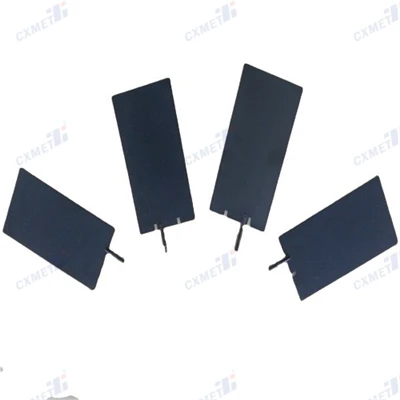
First, let’s set the scene. Titanium anodes are super popular for ICCP because they’re way more corrosion-resistant than other options like graphite or lead-based anodes. They’re usually coated with a mix of metals (think platinum, iridium, ruthenium) that makes them great at releasing the current needed to protect steel structures. But temperature? It’s like the quiet influencer that changes how well these anodes perform, how long they last, and even how much power your system needs to run. I’ve seen clients ignore this factor end up with anodes dying 2 years early instead of 5, so trust me—this isn’t something to sleep on.
Let’s start with the basics: temperature’s effect on the anode’s output. When water (or whatever electrolyte you’re using, like seawater) warms up, its conductivity goes up. Cooler water is more viscous, right? That means ions move slower—so the electrical resistance between the anode and the steel structure is higher. Warmer water? Ions zip around faster, so resistance drops. For your ICCP system, that means you might not need to crank up the current as much in warm temperatures to get the same protection. Wait, but hold on—there’s a flip side here. If the water gets too hot, that higher conductivity doesn’t always equal a win. I’ve worked with offshore rigs in the Gulf where water temps can hit 90°F (32°C) in the summer, and we had to adjust anode current outputs to prevent overprotection. Too much current can cause “hydrogen embrittlement” on steel, which is basically like making the steel brittle and prone to cracking. No bueno. Then in the winter, when water drops to 50°F (10°C), we have to bump the current a bit to keep up—clients who didn’t do this ended up with small rust spots that turned into big issues over time. That’s the practical stuff you don’t get from just reading a textbook.
Next up: anode lifespan. This is where temperature really hits hard, and it’s something every buyer cares about. Titanium anodes degrade over time because the coating is slowly wearing away as it releases current. Studies (and our own field data) show that for every 18°F (10°C) increase in electrolyte temperature, the anode’s degradation rate doubles. Wait, that’s a big number. Let me put that in perspective: an anode that would last 5 years in 60°F (15°C) water might only last 2.5 years in 78°F (25°C) water. We saw this firsthand with a ferry client that operates in the Caribbean—their anodes were failing way faster than projected, and once we checked, their route had average water temps 10°F higher than their previous service area. The good news? Titanium’s corrosion resistance is still way better than other anodes even at higher temps, but you can’t treat them like a one-size-fits-all. We make custom anodes for clients in hot climates with thicker coatings, which fixes a lot of the over-degradation issues. That’s the kind of tailored solution you get when you work with a supplier that actually knows the day-to-day challenges, not just specs on a sheet.
Wait, what about extreme low temperatures? I know a lot of clients work in cold regions, like the North Sea or Great Lakes. Does cold hurt titanium anodes? From what we’ve seen, it’s not as bad as high temps, but it does come with its own quirks. Cold water has higher oxygen content, right? That can lead to a bit more “passivation” on the anode’s surface—passivation is when a thin, protective layer forms on the titanium, which sounds good, but it can make the anode less efficient at releasing current. So in super cold waters, you might need to break that passivation layer occasionally (we’ve got small adjustment tricks for that) to keep the current flowing. Also, cold temps can make the ICCP system’s power supply less efficient, so you have to factor that into your energy costs. A client in the Great Lakes was shocked when their winter energy bill jumped 30%—turns out they didn’t account for both the anode’s reduced efficiency and the power supply’s lower performance in cold. That’s a mistake we help clients avoid now.
Another thing to watch: temperature and anode stability. Titanium anodes are stable in most marine environments, but rapid temperature swings? That’s a problem. Like, if an anode’s exposed to sudden shifts—say, a structure that goes from being submerged in cold river water to warm seawater when it enters an estuary—the thermal expansion and contraction can cause the coating to crack. Titanium expands a little when it heats up, contracts when it cools, and if the coating (which is a different metal) doesn’t expand at the same rate, it cracks. We’ve seen this with pipelines that go from winter to summer temperatures quickly—small coating cracks, which let electrolyte seep in and speed up degradation. The fix here is to use coatings that match titanium’s thermal expansion coefficient, which we do for most of our anodes now. It’s a small tweak, but it makes a huge difference in areas with big seasonal temp changes.
Let’s talk real-world examples because I know you don’t care about lab data alone. Last year, a client from a shipyard up in Canada reached out because their ICCP anodes were failing after 2 years, way earlier than the 5-year warranty. We did an on-site check, and their ships operate in water that goes from 35°F (1.7°C) in winter to 75°F (24°C) in summer. They were using a standard anode that worked in warmer waters, but the winter passivation and summer over-degradation were killing them. We switched them to our temp-adjusted anodes—thicker coating for summer, a minor surface treatment to prevent passivation in winter—and now their anodes are hitting 4.5 years, which is almost double. They saved thousands in replacement costs, and their hull rust issues dropped to almost zero. That’s the kind of result you get when you understand how temperature interacts with these anodes, not just sell a generic product.
Now, what does this mean for you as a buyer? First, don’t just look at anode specs on a website—ask about how they perform in your typical operating temperatures. If you’re in a warm climate, prioritize anodes with heat-resistant coatings that slow degradation. If you’re in a cold area, make sure the supplier has experience dealing with passivation and power adjustments. If you have structures that see big temp swings (like bridges with pilings that go from cool freshwater to warm saltwater), ask about coatings that handle thermal expansion. Also, don’t sleep on monitoring your system’s current as temps change. A small adjustment in the summer vs. winter can prevent over or under-protection, which saves you from costly repairs down the line.
Wait, I should clear up a common myth here: some people think titanium anodes can handle any temp, but that’s not true. Sure, they’re way more resilient than lead or graphite, but temperature is a variable that can’t be ignored. I’ve seen competitors sell the same anode to a client in the Gulf and a client in the North Sea, and both end up unhappy because they didn’t adjust for temp. That’s why we take the time to ask clients about their exact environment—water temps, seasonal changes, what structure they’re protecting—before we recommend an anode. It’s not just about selling a product; it’s about making sure it works for your specific situation.
Let’s wrap this up. Temperature affects ICCP titanium anodes in three key ways: it changes electrolyte conductivity (so you need to adjust current output), it speeds up degradation at higher temps (so thicker coatings might be needed), and it can cause issues like passivation in cold or coating cracks from rapid temp swings. Ignoring these factors leads to early anode failure, higher energy costs, and corrosion damage to your structure. The good news is that with the right anode selection and small system adjustments, you can mitigate almost all these issues.
If you’re tired of anodes that don’t hold up to your operating conditions, or you’re not sure if your current ICCP system is optimized for your local temps, let’s connect. We’ve helped dozens of clients tweak their anode setups to perform better in all kinds of temperature environments, from Arctic waters to tropical seas. Whether you need a custom anode for a specific project or just want to run through your current setup, we’re here to help you get the most out of your ICCP system. Don’t wait for your anodes to fail—reach out to talk through your needs.
MMO Anode References
- Schütze, M., & Zhang, J. (2018). Corrosion of Titanium and Titanium Alloys. Wiley.
- International Organization for Standardization. (2020). ISO 12696: Cathodic Protection of Steel in Seawater and Sediment. ISO.
- Walters, D. (2021). “Temperature Effects on Mixed Metal Oxide Anodes for ICCP.” Journal of Marine Engineering and Technology, 20(3), 189-197.
- Baeckmann, W., Schwenk, W., & Prinz, W. (2019). Handbook of Cathodic Protection (3rd ed.). NACE International.
Shannxi CXMET Technology Co., Ltd.
As one of the most professional iccp titanium anodes manufacturers and suppliers in China, we also support customized service. Please feel free to buy high-grade iccp titanium anodes for sale here from our factory. Good service and quality products are available.
Address: 191 Integer Rd, 2nd StrLA 08219, P.R China.
E-mail: sales@cxmet.com
WebSite: https://www.cxmetanode.com/
