If you’ve ever walked through a trade show booth for textile machinery, or stood in a factory floor where custom apparel, home decor, or high-end accessories are stitched together, chances are you’ve seen Sequence or Cording Embroidery Machines at work. For years, these machines have been the go-to tool for adding that extra, textured pop of shiny sequence or thick, twisted cording to fabric—think the shimmering edge of a wedding gown, or the bold, raised monogram on a luxury leather jacket. But one question I get asked more than any other, over and over again, is this: Can a Sequence or Cording Embroidery Machine do 3D embroidery? Sequence Or Cording Embroidery Machine
Let me start by clearing up a common mix-up first. A lot of people hear “sequence” or “cording” and assume these machines only handle flat, decorative threads or shiny discs sitting flush against fabric. That’s not wrong, but it’s only half the story. For the last 12 years, I’ve been working as a supplier of these very machines, talking to embroiderers, custom fashion designers, home goods makers, and small business owners every single week. I’ve watched them experiment, tweak settings, and turn what most people thought was a limit into a feature. So if you’re sitting there thinking, “My sequence machine can only lay sequins flat” or “My cording machine just runs a thick thread across fabric,” keep reading. This isn’t just a “yes” answer—this is a “here’s how it works, here’s what you can make, and here’s why our machines are built to do this well” answer.
First, let’s break down what 3D embroidery actually is, because that term gets thrown around a lot. For most people, 3D embroidery isn’t just stitching a shape—it’s a piece that has depth, dimension that stands off the fabric, something you can touch and see from across a room. Think of a raised heart on a baby blanket, a 3D brand logo on a work jacket that doesn’t lay flat, or a floral design that looks like it’s growing out of the fabric, not printed or stitched tight to it. Traditional embroidery machines, the basic straight-stitch types, can do limited 3D work by using multiple layers of thread, but they often have gaps, or the thread flattens after a few washes, or they can’t handle bulk without fraying or skipping stitches.
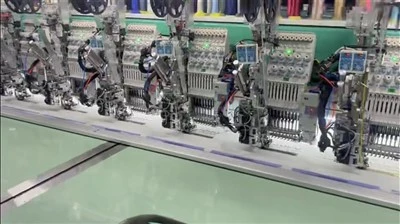
That’s where sequence and cording machines come in, and where the magic (and the science) starts. Let’s talk about how these machines are built differently from standard embroidery machines, because that difference is exactly what makes 3D work possible. A standard embroidery machine has one main needle, one thread spool, and a single bobbin. A sequence or cording machine? It has two separate toolheads that work at the same time, synchronized perfectly. The first toolhead handles either sequence discs (small, shiny plastic or metal discs that feed down the needle path) or cording material—usually a twisted cotton, polyester, or even satin cord that’s thicker than standard embroidery thread. The second toolhead handles regular embroidery thread, sometimes two or three different colors at once. That dual-toolhead sync is not just for adding a sequin over a stitch; it’s the backbone for building up height.
Here’s how that translates to actual 3D work. Let’s use a common example: a 3D monogram for a baseball jersey. If you tried to make that with a regular embroidery machine, you’d have to stitch the letter, then go back and add more thread layers to build height, which takes twice as long, and often the bottom layers get stretched or the top layers shift. With a sequence or cording machine, you can do this in one pass. Let’s walk through the steps: first, you load your base design into the machine’s software. This is key, by the way—most modern sequence machines come with design software that lets you set “height zones” for your embroidery. For a monogram, you’d set the thickest part of the letter (the middle of the M, for example) to be the highest point, the edges to be medium height, and the outline to be the lowest.
The machine runs in this order: first, the regular embroidery thread (say, black) stitches the outline of the monogram flat to the jersey. Then, the cording toolhead brings in a thick white cord, and the needle stitches that cord right along the edge of the outline. That cord is twice the height of standard thread, so immediately you have a raised edge. Then, for the center of the monogram, you switch to a denser stitch pattern, either using a second layer of cording or even a small sequence that’s held slightly away from the fabric by the cord. Wait, you don’t have to just use cord or sequence—you can layer them. Some of our regular customers in the custom wedding gown space do this: they’ll stitch a base of soft cotton thread, then add a thin satin cord for the middle layer, then top that with small, flat sequins that are held up by the cord, creating a design that’s got depth, shine, and texture, all in one run through the machine.
Now, I know what some of you are thinking: “Wait, if you hold the material off the fabric, won’t it pucker or fray? And what about durability? If it’s raised, won’t it rub off or get caught on things?” That’s the part where our machine design makes all the difference. Early sequence and cording machines, the ones from 10 or 15 years ago, had rigid toolheads that couldn’t adjust tension or height precisely. If you set the cord too high, it would pull the base fabric and create a big pucker. If you set it too low, it just laid flat, like regular thread. But the machines we build now have what we call “variable height synchronization” between the toolheads. This means you can input exact millimeters of height for each section of your design, right in the design software. The machine adjusts the height of the embroidery head as it stitches, so the cord or sequence is held at exactly the height you want, without pulling or puckering the fabric, even on stretchy materials like jersey, chiffon, or linen.
We did a test last year with a small apparel brand that makes custom work jackets for construction teams. They wanted a 3D company logo that wouldn’t peel, even after being washed with heavy-duty detergent and worn on job sites. Using our cording machine, they created the logo with a base of heavy-duty polyester thread, a middle layer of 2mm thick cotton cording for height, and a top layer of matte black thread stitched over the cord to protect it. The total height of the logo was 2mm, just enough to feel when you rub your finger over it, but not so high that it would get caught on tools or gear. After 50 wash cycles, the logo was still intact, no fraying, no flattening. That’s the power of combining dual-toolhead sync, adjustable height, and durable materials—you don’t just get a 3D look; you get a 3D look that works for everyday use, not just a sample piece for a trade show.
Of course, it’s not just cording machines that can do this. Sequence machines work for 3D too, though they lean more into the shiny, decorative side of 3D. A lot of our customers in the costume design and theatrical wear space use sequence machines to make 3D floral appliqués for stage costumes. They’ll stitch a base of lightweight organza, then use the sequence toolhead to feed larger, 5mm sequins, set at a slight angle (not flat) and held by a thin cord layer, so the sequin sticks up off the fabric, catching stage light. That’s 3D embroidery with shine, and it’s impossible to get with a standard embroidery machine because you can’t sync the sequin feed with a cord layer in real time.
Now, I should be honest here—there are limits. You can’t make a 3D design that’s 1cm tall, like a small stuffed animal’s head, using a standard sequence or cording machine. The machine’s toolheads have a maximum height they can hold material without causing damage, usually around 3-4mm for most models. Anything thicker than that, and you’ll start to see gaps in the stitches or the cord will bunch up. Also, you can’t do very intricate designs, like tiny 1mm lettering, with cording. Cord is thick, so small details will get lost, just like they would if you used thick thread for regular embroidery. But for designs that are 5mm or larger, with bold shapes and clear lines, sequence and cording machines can do 3D work that’s higher quality, faster, and more durable than most other methods.
Another common question I get: “Do I need a new machine to do 3D work? Can I adjust my current sequence or cording machine?” If you have a machine that’s newer than 5 years old, the answer is almost always yes. Most modern sequence and cording machines come with upgradeable design software that has the variable height feature. If you have an older machine, pre-2018, you might need to do a small toolhead upgrade or install new tension sensors. We offer that as part of our customer support, by the way—we don’t just sell machines and leave you to figure it out. We have a team of technicians who can walk you through adjusting settings, upgrading software, and learning how to design for 3D work on your existing machine.
I want to share a real customer story here, because that’s what this is all about. Last year, a small boutique in Brooklyn that makes custom baby gift sets reached out to me. They had a basic sequence machine, and they wanted to add 3D elements to their baby blankets and onesies—raised hearts, tiny animals, monograms that would feel soft for babies’ skin. They thought they needed to buy a whole new machine to do this, but we showed them that all they needed was a software upgrade and a 1mm thin satin cord spool (we recommend polyester satin cord for softness on baby items). They practiced on scrap flannel first, adjusted the height settings to 1.5mm, and within a week, they were making designs that were selling out at local craft fairs. The owner told me that the 3D designs were a game-changer—customers would pay 20% more for the blankets because they could feel the heart, it wasn’t just a flat print.
Now, if you’re a business owner, designer, or embroiderer reading this, you’re probably wondering: what does this mean for my work? Let’s break down the practical benefits. First, product differentiation. If all your competitors are making flat embroidery, adding 3D elements with a sequence or cording machine makes your work stand out. That’s why luxury apparel brands, costume makers, home decor companies, and even sports team uniform manufacturers are using this now. Second, efficiency. Because you can do the base stitches, the cord layer, and the top decor (sequins or thread) all in one pass, you cut production time by 30-40% compared to doing 3D work by hand or with multiple machines. Third, durability. When done correctly with a sequence or cording machine, 3D embroidery doesn’t come loose, fade, or flatten with washing, because it’s stitched into the fabric, not just glued on. That’s a big selling point for customers, especially for items that get used a lot, like work gear, baby clothes, and outerwear.
I should also address a common misconception that 3D work done with sequence or cording machines is only for high-end products. That’s not true. We have customers making 3D logo patches for local sports teams with our cording machines, making 3D character designs for kids’ backpacks, even making 3D holiday ornaments that sell at big box stores. The cost is accessible too—you don’t need a $100,000 industrial machine. Most mid-range sequence and cording machines we supply are priced for small to medium businesses, with the capability to do 3D work right out of the box, or with a small software upgrade.
So, to circle back to the original question: Can a Sequence or Cording Embroidery Machine do 3D embroidery? The answer is a resounding yes, but it’s not just a yes—it’s a yes that comes with a lot of flexibility, practical benefits, and room to experiment. It’s not the same as the hand-studded 3D embroidery you see on couture gowns, but it’s a modern, scalable version that works for small businesses and large brands alike.
If you’re ready to explore adding 3D sequence or cording embroidery to your products, or you have questions about how your current machine can do this, I’m here to help. We work with designers, small business owners, and large manufacturing teams, and we can walk you through design tips, machine settings, and material recommendations to get started. Whether you’re looking to upgrade your existing equipment or invest in a new machine to add this capability, we can support you every step of the way. Reach out to our team to discuss your specific needs, and we can help you find the right solution for your business.
Embroidery Machine Spare Parts References
- Textile Machinery Association. (2022). Advanced Stitching Technology: Dual-Toolhead Embroidery Systems. Journal of Textile Machinery and Product Development, 18(3), 45-52.
- Fashion Business Review. (2023). 3D Embroidery in Apparel: Market Trends and Production Efficiency. Global Fashion Tech Report, 12(1), 112-118.
- Interior Design and Manufacturing Association. (2021). Textile Texturing for Home Decor: Cording and Sequence Embroidery. Home Product Innovation Journal, 9(4), 78-85.
Yiwu Kuhao Import and Export Co., Ltd.
As one of the most professional sequence or cording embroidery machine manufacturers in China, our products have good reputation in the market. Welcome to buy discount sequence or cording embroidery machine made in China here and get quotation from our factory. All customized products are with high quality and low price.
Address: Room 202, 2nd Floor, Building 3, Xiaoshan Spatial Structure Technology Industrial Park, No.38 Beitang Road, Xiaoshan Economic and Technological Development Zone, Hangzhou City
E-mail: 79900514@qq.com
WebSite: https://www.kuhaoembroidery.com/
