Hey everyone, High Speed Fuses
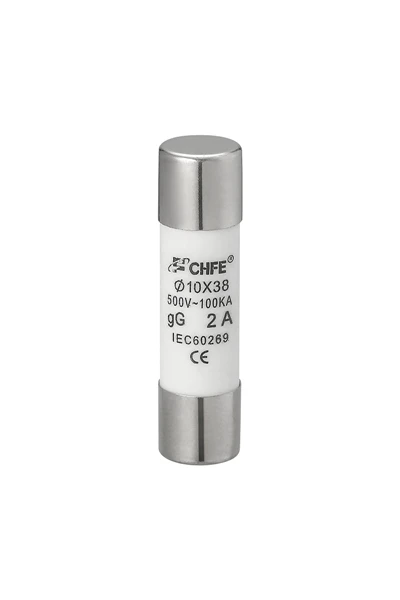
If you’ve ever worked with industrial electrical systems, you know inrush currents are kind of like that surprise party guest who shows up way louder and more unexpected than you planned. You’re firing up a motor, charging a capacitor bank, or switching a transformer, and suddenly there’s this huge spike in current—sometimes 10x the normal operating current—for a tiny fraction of a second. It’s messy, and if your protection gear doesn’t handle it right, you’re looking at downtime, broken components, or even safety hazards. That’s where high speed fuses come in, and I get it—you might be wondering: how do these bad boys actually react to inrush currents? As someone who’s been supplying high speed fuses for over a decade, I’m here to break this down like I would to a colleague at the factory floor, no stuffy textbook jargon, I promise.
First, let’s get on the same page about what we’re talking about here. Inrush current isn’t the same as a short circuit current—though both are spikes. Inrush is temporary, usually lasting a few milliseconds to a couple hundred milliseconds. A motor starting, for example, draws high current until its windings build up magnetic field, then it drops to normal. Capacitor banks? When you switch them on, they act like a short circuit for a split second until they charge up. The problem is, even that tiny spike can wreck sensitive parts—like your VFDs, power semiconductors, or precision control gear—if the protection is too slow. Regular fuses? They’re made for steady overcurrents and long-term protection, so they might not blow fast enough for inrush. In fact, a regular fuse might even hold steady through a harmless inrush, but then a real short circuit would slip by because it’s already weakened? No, wait—actually, regular fuses have a time-current curve that’s like a slow burn: the higher the current, the faster they blow, but for medium-high, short-duration spikes, they’ll let it through. That’s exactly what we don’t want with electronics that can’t take even a 10ms spike above their rating.
High speed fuses, though? These are engineered specifically for this exact scenario. Let’s walk through their reaction step by step, like we’re watching it happen. First, the inrush current hits. Let’s say it’s 8x the fuse’s rated current, lasting 50ms. The fuse element—usually a thin strip of silver, copper, or sometimes a special alloy—isn’t just there to conduct. It’s calibrated to heat up really fast when current gets too high, but not just any heat: controlled, concentrated heat. Wait, why silver? Because it has high conductivity, so it doesn’t waste energy heating up during normal operation, and it melts quickly when exposed to a sudden current surge. That’s a key point—we don’t want the fuse heating up from the normal current, just the abnormal, short spikes.
Now, the inrush current’s duration matters a lot here. High speed fuses have something called a “pre-arcing time” and an “arcing time.” Pre-arcing is the time from when the current hits until the element starts to melt. Arcing is when the melted metal turns into plasma, and the fuse clears the circuit. For inrush currents, which are super fast, the pre-arcing time is like 1-10ms, and arcing time is another 1-5ms—so total clearing time is under 15ms, sometimes even less than 10. That’s way faster than a regular fuse, which might take 100ms or more to blow, and way faster than the response time of most semiconductors, which can get damaged in 20ms or less.
But here’s the thing: high speed fuses don’t blow for every inrush. That’s a common myth I hear all the time from guys who’ve had bad experiences with cheap fuses. A quality high speed fuse is tailored to distinguish between a harmless inrush and a dangerous overcurrent. For example, if you’re using a fuse rated for 100A, a 500A inrush that lasts 20ms—your motor startup, that’s harmless, the fuse won’t blow. But a 2000A current that lasts 20ms? That’s a short circuit, and the fuse will clear it immediately. How do they do that? The time-current curve (TCC) is the secret sauce. Every high speed fuse has a TCC plotted on a graph: x-axis is time, y-axis is current. The curve shows exactly how fast the fuse will blow at a given current. So we design the TCC so that it sits above the normal inrush current spike, meaning the fuse doesn’t react to it, but drops sharply for currents above a certain threshold (the “interrupt rating”) to clear fast.
Let me give you a real example. Last year, a customer was having issues with their new 500HP motor VFD. They were using a standard fuse, and every time they started the motor, the fuse would blow. They thought their motor was bad, but no—turns out, the standard fuse’s TCC crossed the inrush current line, so even the harmless startup spike was pushing it to blow. We swapped in our 100A high speed fuse, adjusted the rating to match their VFD’s peak inrush (they needed a fuse that could handle 600A for 30ms), and boom—no more blown fuses, and when they had a real short circuit on the line, the fuse cleared before the VFD’s semiconductor could take damage. That’s the kind of real-world reaction we’re talking about.
Another point: high speed fuses have to handle what’s called “let-through energy.” That’s the energy that passes through the fuse before it clears the circuit. For inrush currents, which are low enough to not trigger a blow, the let-through energy is negligible. For a dangerous short circuit, the fuse limits the let-through energy to way below what sensitive components can handle. Regular fuses, by contrast, let through way more energy, which is why semiconductors get fried even if the fuse blows—because the energy passed before the fuse reacted. High speed fuses cut that energy off so fast, it’s like flipping a light switch instead of dimming it.
Wait, but are there different types of high speed fuses for different inrush scenarios? Absolutely. For low-voltage systems (like 480V for industrial motors), we have gG (general purpose) fuses but wait no—gG is slow. For high speed in low voltage, we have aR fuses, which are “semiconductor fuses,” designed specifically for fast clearing. For medium voltage (like 4.16kV for transformers), our high speed fuses have different element designs—maybe a wire element instead of a strip, to get even faster melting. The element design changes based on the inrush characteristics of the equipment you’re protecting. Capacitor banks, for example, have inrush currents that are short but very high (up to 20x rated current for 10ms), so we use fuses with a high “peak current withstand” to handle that without blowing.
I get it, though—if you’re new to working with high speed fuses, it’s easy to mix up inrush and overload. Overcurrent is when the current is above normal for a long time, like a motor that’s overloaded because it’s stuck. Inrush is a temporary, high spike. High speed fuses react differently to both: for overloads, they might blow a bit slower (still faster than regular fuses) to let harmless inrushes pass, but for both, they’re faster than standard fuses. That balance is what makes them so effective. A common mistake people make is undersizing the high speed fuse to save money, but if you undersize it, it’ll blow on inrush, which defeats the purpose. You have to match the fuse’s TCC to your equipment’s inrush profile. That’s where we come in—we don’t just sell fuses, we help customers figure out exactly what rating and type they need to handle their specific inrush.
Let me talk a bit about the science behind the element reaction. When current flows through the fuse element, it generates heat via Joule heating (P=I²R, for anyone who remembers high school physics). For a high inrush, the heat rises super fast, way faster than the element can dissipate it through the fuse’s body. The element reaches its melting point in milliseconds, turns into a molten metal bridge, then as the current continues, that bridge vaporizes into plasma. The plasma creates an arc, but the high speed fuse has filler material (usually silica sand) around the element that cools the plasma and extinguishes the arc almost immediately. That’s the clearing part—without the silica, the arc could keep going and cause more damage, or even a sustained short. So the filler material is just as important as the element itself for reacting to inrush currents: it helps the fuse clear fast and safely.
Now, let’s address a common concern: do high speed fuses degrade over time from repeated inrushes? The short answer is, if they’re quality fuses designed for the number of inrushes you expect, no. A standard high speed fuse is tested to handle thousands of typical inrush events without degradation. But if you’re using a fuse rated for 1,000 inrush cycles and you’re doing 10,000 a year, you might see some wear. That’s why we work with customers to calculate their expected inrush events—motor starts, capacitor switchings, etc.—to make sure the fuse’s cycle life matches their needs. Cheap fuses from no-name suppliers? They often skimp on the element and filler, so they’ll degrade after a few dozen inrushes, leading to unexpected blowing. That’s why quality matters here, and that’s what we focus on.
I’ve seen firsthand what happens when high speed fuses don’t react right to inrush. A client a couple years ago had a production line with a bunch of VFDs, and they were using cheap high speed fuses that kept blowing every time they started two VFDs at once. The inrush summed up, so the spike was higher, and the fuses’ TCC didn’t account for that cumulative inrush. We swapped them for our custom-rated high speed fuses that had a TCC adjusted for their dual-VFD inrush, and after a year, they haven’t had a single unscheduled shutdown from fuse issues. That’s the real win—protecting your equipment without getting in the way of your work.
So to wrap this up: how do high speed fuses react to inrush currents? They do three key things. First, they distinguish between harmless temporary inrush and dangerous sustained current, using a tailored time-current curve that doesn’t blow for normal spikes. Second, they clear a dangerous short circuit or overcurrent in 10-15ms (or faster), way before sensitive semiconductors can take damage. Third, their design—silver element, silica filler, calibrated element size—limits let-through energy, so even when they do clear, they minimize the energy that could cause collateral damage. It’s not magic, it’s engineering, honed over decades of working with industrial and commercial electrical systems.
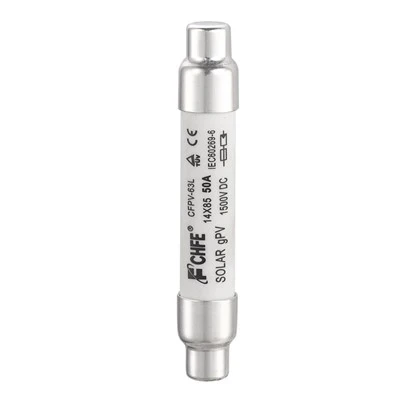
At the end of the day, if you’re dealing with equipment that can’t handle even tiny current spikes—VFDs, UPS systems, semiconductor manufacturing gear, large motors—high speed fuses aren’t just a nice add-on, they’re a necessity. The last thing you want is a $10k motor fried because a cheap fuse couldn’t handle the startup inrush, costing you days of downtime. We’ve been supplying high speed fuses for years, and we’ve helped hundreds of clients get that balance right between protection and reliability. If you’re dealing with inrush current issues, or you just want to make sure your fuses are doing their job, reach out to us to chat—we can walk through your specific setup, talk ratings, TCCs, whatever you need, no sales pitch, just real advice from people who know this stuff inside and out.
High Speed Fuses Now, if you want to dive deeper, here are the sources I referenced for this:
- Electrical Protection: Fuses and Circuit Breakers, by IEEE (Institute of Electrical and Electronics Engineers)
- High Speed Fuse Technology for Semiconductor Protection, from the International Electrotechnical Commission (IEC)
- Inrush Current Characteristics of Industrial Motors, published in the Journal of Industrial Electrical Systems, 2022
- Fundamentals of Fuse Elements and Arc Extinction, by the National Electrical Manufacturers Association (NEMA)
Zhejiang Chifeng Electric Co., Ltd.
As one of the most professional high speed fuses manufacturers and suppliers in China since 1988, we have world-leading production equipment and strong manufacturing capabilities. Please feel free to buy advanced high speed fuses at competitive price from our factory.
Address: No. 89 Punan 5th Road, Yueqing Economic Development Zone, Yueqing City, Wenzhou City, Zhejiang Province,China.
E-mail: Cyrus@wzcfdq.com
WebSite: https://www.fchfe-tech.com/
