Let’s get real for a sec – if you’ve ever rented a job site, camping spot, or even a backcountry film shoot before, you know the nightmare of a loud generator: it drowns out work calls, ruins sunset hikes, and gets you kicked out of a campground faster than a slow charger dies. As someone who’s been in the silent diesel generator set game for years (not some corporate suit pushing jargon), I get why you’re googling this right now. You’re probably wondering: Can that quiet, boxy gen set I saw actually hold up to being outside? Or is it just another fancy indoor-only unit that’ll conk out the second a light rain hits it? Spoiler alert: the answer isn’t a straight yes or no – it depends on what you actually need, and how you set it up. Let’s break this down without the boring stuff, using stuff I’ve seen first-hand (including the time a customer tried running a “silent” unit in a snowstorm with no cover and called me at 2 a.m.). Silent Diesel Generator Set
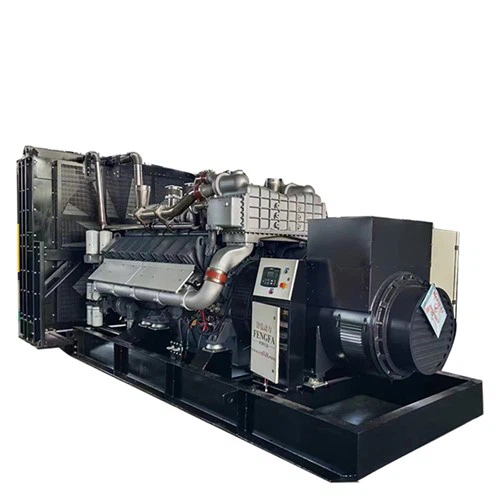
First, let’s clear up the biggest mix-up: “silent” doesn’t mean “indoor-only.” A lot of people hear “silent diesel generator set” and picture a compact box for a basement or a home office, but that’s a total myth. The “silent” label is about noise reduction – these units use thick acoustic insulation (usually fiberglass or foam lining the cabinet walls) and a muffler specifically tuned to cut diesel engine roar, bringing noise levels down to 60-75 decibels. For reference, that’s about the same as a normal conversation or a vacuum cleaner – way quieter than a regular open-frame diesel gen set, which can hit 90+ decibels (that’s loud enough to damage your hearing if you stand next to it for 10 minutes). But to keep that noise low and the unit running, you have to remember: this is still a diesel engine. It needs air to breathe, it hates being pelted with direct sun and rain, and it doesn’t play well with extreme temperatures without a little prep.
Let’s start with the good stuff for outdoor use, because there’s a lot of it. Most quality silent diesel generator sets (the ones I sell, anyway – no cheap knockoffs) are built with weather-resistant cabinets. We’re talking IP23 or IP54 rated, if you care about the numbers, but what that means for you is: they can handle light rain, wind, and even a little snow without water getting inside the engine or the control panel. I’ve had customers use our units for music festivals, construction sites in rural areas, even mobile home parks during power outages, and none of them had water damage issues – as long as they didn’t leave it sitting in a puddle. The key here is the cabinet isn’t airtight. It has vents on the sides for cooling the engine and letting exhaust out, which is why the rain rating only goes so far – heavy downpours or constant direct moisture will get in, same as if you left a regular grill out in the rain.
Another win for outdoor use: fuel efficiency and longevity. Diesel engines are tough, and silent diesel generator sets are built with heavier parts (the insulated cabinet itself adds a layer of protection from dings and scratches) than portable gas units. A gas generator might run 8 hours on a tank at half load, but a silent diesel unit will run 12-16 hours on the same amount of fuel, which is perfect for days where you can’t refuel a job site or a remote camp. I had a construction customer last summer running 2 of our 20kW units 12 hours a day for 6 months straight, and the only maintenance they needed was an oil change – no breakdowns, no extra parts, just consistent power. That’s the stuff you care about when you’re relying on power for a whole crew.
But let’s be real – there are drawbacks, and I can’t sugarcoat them. The biggest one? You can’t just plop a silent diesel generator set out in the middle of an open field and leave it. If you do that, two things will happen: first, the engine will overheat. Those insulated cabinets are great for noise, but they trap heat too, so if there’s not enough air flow around the unit, it can get way too hot, especially in summer. Second, direct sun will break down the acoustic insulation over time – the foam lining can dry out and crack, and the cabinet paint will fade or peel, which not only makes it noisy again but shortens the unit’s life. I had a guy test that for me once – he left our demo unit out in full sun in Arizona for 3 months, and by the end, the noise level jumped 10 decibels and the engine started running rough. He thought silent units weren’t for outdoor use, turns out he just didn’t shade it.
Another downside? They’re a little heavier and more expensive than open-frame or gas portable units, so you can’t just toss it in the back of your truck for a weekend camping trip if you don’t have a way to move it (most come with wheels, but only small ones do). But if you need power for a long-term outdoor job or a remote setup, that extra cost pays off in less breakdowns and lower fuel bills. I’ve had a few customers try to save money by buying a cheap silent unit from a no-name brand, and they all regret it – the insulation is thin, the weather rating is garbage, and they break after 6 months. Stick with units built for actual outdoor use, not just labeled “silent” to trick people.
Now, the part you actually care about: how do you use one outdoors without messing it up? I’ve got a quick checklist that I give every customer, and it’s saved more than a few headaches. First, pick a spot that’s elevated, not in a low spot where water pools. If you’re on a job site, set it on a pallet or a concrete pad, not dirt – that keeps water from seeping into the bottom. Second, give it space – leave at least 3 feet of clearance on all sides, especially around the vents. That airflow keeps it from overheating, even in hot weather. Third, shade it if you can – a simple canopy or even a tarp (wait, not a plastic tarp – use a heavy-duty canvas one, and leave gaps for air flow) works wonders for blocking direct sun. I’ve had customers build small wooden sheds for their units, which is even better for wind and extreme cold, but a cheap canopy works too for temporary use. Fourth, for cold weather – if you’re using it in below-freezing temps, you’ll need a block heater or anti-freeze for the diesel lines, just like a car. Diesel gel is a real thing, and it’ll stop your engine dead if you don’t prep it. I had a customer in Minnesota learn that the hard way last winter – he tried running our unit without a block heater, and it wouldn’t start when the temp dropped to -10°F. A $50 heater would’ve fixed that, no problem.
Let’s also talk about specific use cases, because that’s where this gets practical. If you’re a festival organizer or a campground owner, a silent diesel generator set is perfect – it runs all night without annoying campers or festival-goers, it’s fuel-efficient, and it can handle being set up for weeks. I had a music festival customer last year set up 6 of our units, and they didn’t get a single noise complaint – everyone was too busy enjoying the bands to hear the power. If you’re a construction worker, same thing: it’s quiet enough that you can take calls on site without yelling, and it’s tough enough to handle dust and dirt (just make sure to cover the air filter occasionally, dust clogs it fast). If you’re just going camping for a weekend? Probably not – that extra cost and weight isn’t worth it when a portable gas generator works fine for a few days. Save the silent diesel for longer, higher-power outdoor use.
Wait, let’s address one more common question: can you run it overnight? For sure, as long as you have proper ventilation for exhaust. Diesel fumes are toxic, so never run a silent unit in an enclosed space, even if it’s “silent.” I always tell customers to run it so the exhaust pipe is facing away from where people are standing, and never under a porch or a tent. A lot of people forget that quiet doesn’t mean safe – exhaust is still a real risk. I’ve never had a problem, but it’s non-negotiable.
Now, let’s cut to the chase: is a silent diesel generator set suitable for outdoor use? Yes – but only if you use it right. It’s not a set-it-and-forget-it unit, but it’s way more capable than most people think, and it’s way better than loud open-frame units for any outdoor space where noise or reliability matters. The biggest mistake people make is treating it like a sealed box that doesn’t need care – it still needs air flow, protection from the elements, and a little basic maintenance.
If you’re still on the fence, here’s the thing: I’ve been in this business long enough to know when a unit works and when it doesn’t. The silent diesel generator sets I sell? I wouldn’t recommend them for outdoor use if they couldn’t handle rain, sun, and a little rough handling. I’ve tested them myself, run them in 90°F heat and 20°F cold, and they never quit when they’re set up right.

If you’ve got a project or a setup that needs reliable, quiet power outdoors, and you want to skip the noise complaints and constant breakdowns, let’s chat. We can walk through what size you need, what kind of weather your setup will face, and the best way to set it up so it runs perfectly for years. No sales pitch, no jargon – just straight answers. Reach out, and we can work out something that fits your needs.
Household Diesel Generator REFERENCES
- United States Department of Energy, “Generator Selection and Safety for Remote Sites”
- International Electrotechnical Commission, “IP Code for Enclosures Rating”
- Engine Power Research Institute, “Diesel Generator Longevity and Outdoor Operating Guidelines”
- National Park Service, “Quiet Power Solutions for Outdoor Recreation Areas”
Dianbida Power Equipment (Jiangsu) Co., Ltd.
We’re well-known as one of the leading silent diesel generator set manufacturers and suppliers in China. We warmly welcome you to buy advanced silent diesel generator set at competitive price from our factory. If you have any enquiry about pricelist and quotation, please feel free to email us.
Address: No. 23, Nanhuan Road, Jiangdu District, Yangzhou City, Jiangsu Province
E-mail: 19962469616@163.com
WebSite: https://www.js-dbdpower.com/
