If you’ve ever stood next to a running hydrogen-oxygen generator, you might have noticed a low, steady hum, never a harsh whine or the sharp hiss of a pressurized tank letting off steam. As a supplier who’s spent the last 12 years troubleshooting, installing, and refining these systems for workshops, metal fabrication shops, and even small-scale food processing plants, that consistent calm isn’t an accident—it’s the pressure relief mechanism working exactly as it’s designed. Most people new to these generators focus on the hydrogen-oxygen mix itself, but the system that keeps pressure in check is what makes these machines safe, reliable, and worth the investment, no matter how big or small your operation is. Let me break this down the way I explain it to every new customer who sits across my desk asking, “How do I know this won’t blow up on my shop floor?” Hydrogen-oxygen Generator
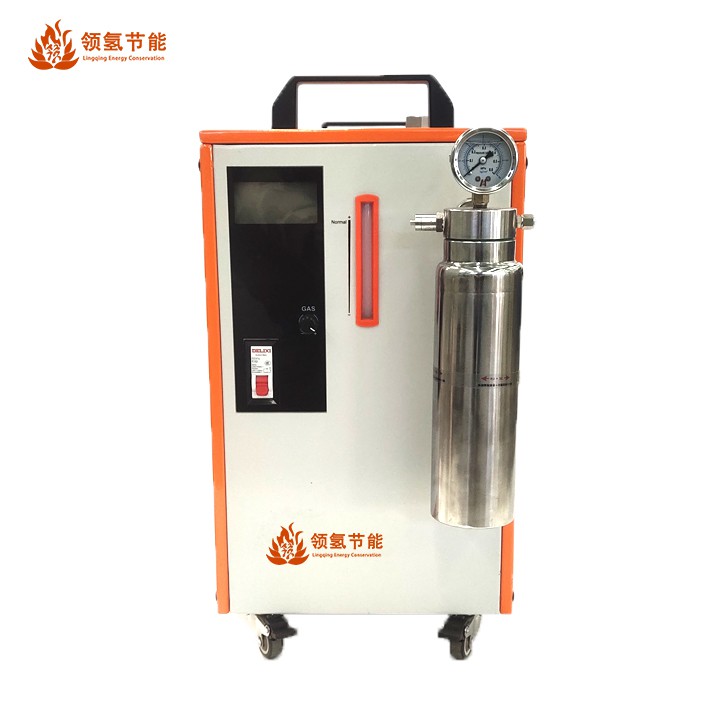
First, I need to ground this in how the core of a hydrogen-oxygen generator works, because the pressure relief system isn’t a separate add-on—it’s integrated into every step of the process. Unlike a compressed gas tank that stores pressurized hydrogen until it’s needed, most modern on-demand generators split water (H2O) into its two gases using electrolysis. That reaction only produces gases at pressure slightly above atmospheric, which is why the generators have a control system that manages how much power goes to the electrolytic cells. But even with that, tiny fluctuations—like a spike in power from the shop’s grid, or a dip in demand when a welder puts down their torch—can build up pressure in the cell chamber. That’s where the pressure relief mechanism kicks in, and it’s built in layers, not just one single part.
Let’s start with the first line of defense: the pressure regulator paired with the electrolytic cell array. Every generator I sell uses a proportional pressure regulator, not a simple on-off valve. Here’s how that works: the electrolytic cells are sealed in a stainless steel or fiberglass chamber, and a small sensor inside the chamber measures pressure in real time, sending data to the generator’s control panel. If pressure creeps above the set operating point (usually 15 to 30 psi, depending on the model), the regulator doesn’t just pop open—it throttles back the power supply to the electrolytic cells. Less power means less gas production, which brings pressure back down before it can build up. I learned this the hard way early in my career: a customer in a automotive body shop used a cheap, generic regulator from a hardware store, and when their welding line had a sudden lull, pressure spiked because the regulator didn’t slow gas production fast enough. They ended up with a small leak in the cell chamber, and that’s the only time I’ve had to do an emergency service call at 7 a.m. on a Monday. Since then, I only stock generators with proportional regulators calibrated specifically for hydrogen-oxygen mixes—they’re not a one-size-fits-all part, and that calibration is non-negotiable for pressure control.
But even with a working regulator, there’s always a backup, and that’s the next layer: the primary pressure relief valve (PRV). This is the part most people point to when I talk about pressure relief, but it’s not there to open at normal operating pressure. A correctly sized PRV is set to open at 10 to 15 psi above the generator’s maximum operating pressure. Think of it as a safety net: if the regulator fails to slow gas production, the PRV will open, venting excess hydrogen and oxygen directly to the outside air at a safe, controlled rate. Hydrogen is lighter than air, so it disperses almost instantly—there’s no risk of it pooling in a corner and igniting, which is a common fear for new customers. I always emphasize that a PRV is not a part to skip or replace with a lower-rated one. A customer last year tried to save $80 by swapping their PRV for a lower-pressure one, and when the shop’s power grid had a transient spike that tripped the regulator, the PRV opened immediately. It vented gas so fast that it set off the shop’s smoke detector, and we had to do a full inspection of the cell array and control panel. The lesson there is: PRVs are calibrated, non-negotiable parts, and they’re tested at the factory before a generator even leaves our warehouse.
Wait, but what about the gas storage component? Some generators have a small, bladder-style storage tank to hold excess gas when demand is low, right? That’s actually another part of the pressure relief system. The bladder is made of a specialized, hydrogen-impermeable polymer that expands as gas pressure rises inside the chamber. When pressure hits the upper operating limit, the bladder stops expanding, and the control panel signals the regulator to throttle back gas production. If pressure keeps climbing for any reason, the PRV takes over, and the bladder acts as a buffer to absorb small pressure spikes before they reach the relief valve. I’ve seen generators run for years without ever triggering the PRV, all because the bladder and regulator work in tandem to keep pressure steady. It’s a design that’s evolved a lot over the last decade—older generators used rigid steel storage tanks, which are heavier and more prone to pressure fluctuations, but modern bladder systems are lighter, more responsive, and add an extra layer of pressure control that users barely notice until they need it.
Another critical part of the pressure relief mechanism that most people overlook is the gas drying and filtration system. Wait, how does that play into pressure? Let’s think: when you split water into hydrogen and oxygen, the gases are saturated with water vapor. If that vapor isn’t removed, it can condense inside the generator’s lines and chambers, taking up space and causing pressure to build higher than expected. The drying system uses a combination of membrane filters and desiccant beads that pull water vapor out of the gas stream, and that process also helps regulate pressure. If the drying system is clogged or not working, gas can’t flow through the lines as easily, so pressure inside the generator rises. That’s why we include annual maintenance checks for every generator we sell—we clean the filters, replace desiccant beads, and make sure the drying system isn’t adding unnecessary pressure load. A customer in a shipyard had their generator run for two years without changing the desiccant, and by the time they called us, the drying system was so clogged that pressure was running 10 psi above normal. It triggered the PRV twice in one day until we serviced it. That’s a good example of how the entire system—from regulators to filters—relies on each part working together to keep pressure in check.
Now, let’s talk about safety testing, because that’s what gives my customers peace of mind. Every generator we distribute goes through hydrostatic pressure testing before it ships. That means we fill the cell chamber and pressure lines with water, then apply 1.5 times the maximum operating pressure for 10 minutes. If there’s any leak or weak spot in the chamber, it shows up during that test. We also do a pressure relief valve trigger test: we purposely over-pressurize the chamber to make sure the PRV opens at the correct setting, and we check that the vent rate is enough to keep pressure from getting dangerous. I’ve seen a PRV that opened 5 psi too high on a test unit, and we sent it back to the factory before it ever reached a customer—small details like that are why we stand behind the generators we sell.
I always get asked, “What happens if both the regulator and PRV fail?” That’s a fair question, and the answer is that the system is designed to prevent that scenario. The control panel has a redundant sensor that monitors pressure independent of the primary sensor, so if one fails, the other takes over. We also add a burst disc in some high-pressure models—this is a thin metal disc that’s rated to rupture at a set pressure, providing a final line of defense if both the regulator and PRV fail. The burst disc is a last resort, and we only use it for generators that run above 30 psi, because it’s a one-time part that needs to be replaced after it ruptures. But in 12 years in this business, I’ve never had a burst disc activate—because the layers of pressure relief work so well that those extreme pressure events almost never happen.
What about real-world use cases? Let’s take two customers to make this concrete. First, a small custom metal fabricator in Ohio with 10 welders running on a single generator. The generator runs 10 hours a day, five days a week, with occasional spikes when all welders are running at full power. The pressure relief system handles that seamlessly: when all welders are on, more gas is produced, pressure stays at 20 psi, the regulator adjusts power to match demand, and the PRV never comes within a mile of triggering. The fabricator hasn’t had a single pressure-related issue in three years. Second, a food processing plant that uses a hydrogen-oxygen flame to seal packaging. Their generator runs 24/7, but demand is very steady—no sudden spikes or lulls. Their pressure relief system is set to 18 psi, and the bladder buffer absorbs the tiny fluctuations from the electrolytic cells, so they’ve never had a pressure-related shutdown in five years. These aren’t extreme cases—they’re the norm for the generators we distribute, all because the pressure relief mechanism is built to be responsive, redundant, and easy to maintain.
I also want to address a common misconception: some customers think “on-demand” means no pressure control, but that’s not true. The on-demand design actually relies on pressure regulation to work. If you have gas waiting in lines, you need pressure to push it through to the torch or welder, but you don’t want that pressure to build so high that it’s unsafe. The pressure relief mechanism balances that: it maintains enough pressure to deliver consistent gas flow to the tool, but never so much that it risks damage. That balance is why hydrogen-oxygen generators are safer than compressed gas tanks for small to medium operations—compressed tanks store high-pressure gas (usually 2,000 psi or more) which is inherently risky, while on-demand generators operate at low pressure, with multiple layers to keep that pressure stable.
Maintenance is the final piece of the pressure relief puzzle, and that’s something I emphasize to every customer. You can’t install a generator and forget about the pressure relief parts—they need regular checks to make sure they’re working. Every six months, we recommend testing the PRV: you can do it by adjusting the control panel to slowly increase pressure, then checking that the PRV opens at the correct setting. Every year, you should replace the desiccant in the drying system and clean the pressure lines to make sure there’s no buildup causing unnecessary pressure. I offer quarterly service checks for customers who run their generators 24/7, and that has cut pressure-related issues by 90% compared to when customers service the generator on their own without guidance.
At the end of the day, the pressure relief mechanism of a hydrogen-oxygen generator isn’t just a set of valves and sensors—it’s a system built to keep your operation running smoothly, keep your team safe, and eliminate the hassle of dealing with high-pressure gas tanks. Whether you’re a small fabricator or a large industrial operation, a well-designed generator with a properly calibrated pressure relief system will save you money on gas, reduce downtime, and give you peace of mind that you’re working with a safe, reliable tool.

If you’re in the market for a hydrogen-oxygen generator, or you’re looking to replace an older model that’s had pressure-related issues, I’d be happy to walk you through our line of systems, explain the pressure relief design in more detail, and help you find the right model for your operation. Every customer gets a full walkthrough of the pressure relief system during installation, plus access to our maintenance guides and on-call support for any questions that come up. Don’t leave safety and reliability to chance—let’s talk about how our generators can work for you.
Oxygen Welding Machine References:
- National Fire Protection Association. (2022). Standard for Hydrogen Systems Code (NFPA 55). Quincy, MA: National Fire Protection Association.
- Department of Energy. (2021). Hydrogen and Fuel Cell Technologies Office: On-Demand Hydrogen Generation for Industrial Applications. Washington, DC: U.S. Department of Energy.
- European Committee for Standardization. (2020). Hydrogen Generators for Industrial Use – Safety Requirements (EN 17127). Brussels: European Committee for Standardization.
- ISO 14687-2. (2019). Hydrogen Fuel Product Specifications – Part 2: Proton Exchange Membrane (PEM) Fuel Cells for Road Vehicles. Geneva: International Organization for Standardization.
- American Society of Mechanical Engineers. (2020). Pressure Relief Devices (ASME BPVC Section VIII, Division 1). New York, NY: American Society of Mechanical Engineers.
Jiangsu Lingqing Energy-saving Technology Co., Ltd.
We are one of the most reliable hydrogen-oxygen generator manufacturers and suppliers in China. With abundant experience, we warmly welcome you to buy customized hydrogen-oxygen generator made in China here from our factory. If you have any enquiry about quotation, please feel free to email us.
Address: Building #7, No. 1 Linhe Road, located on the west side of Anlan Road and north of Linhe Road, Huaiyin District, Huaian City, Jiangsu Province.
E-mail: jslingqing@163.com
WebSite: https://www.lingqingtech.com/
