Hey folks, ever wondered how that plastic spiral corrugated pipe machine on your factory floor is actually shaping your production numbers? I’m not some stuffy industry analyst here—just the guy who spends his days troubleshooting and upgrading these machines for our clients, so I’ve seen firsthand how automation levels turn “meh” production into “that’s way above our quota” days, or vice versa. Let’s break this down straight, no jargon fluff. Plastic Spiral Corrugated Pipe Machine
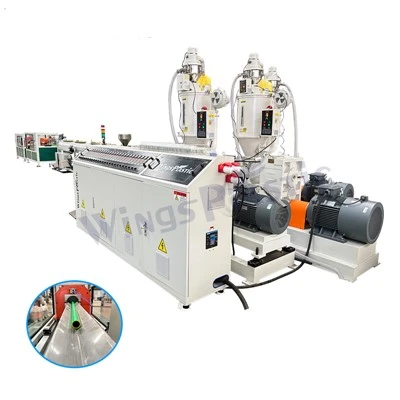
First, let’s get one thing clear: not all spiral corrugated pipe machines are built the same. Some still have dudes standing there all shift long, hand-feeding plastic pellets, adjusting die gaps with a wrench every time the pipe width drifts, and counting every pipe by hand at the end. Others? They’ve got sensors, PLC controllers, even AI that tweaks settings mid-run. That’s the automation level we’re talking about—and it’s not just a “nice to have” for tech heads. It hits every part of your production, from cost per foot to how fast you can deliver that big commercial order.
Let’s start with the basics: production speed. When a machine’s low on automation, that manual labor bottleneck kills pace. I had a client a few months back running a super old, semi-automatic machine—they could crank out maybe 120 meters of 200mm pipe an hour. But once they upgraded to a fully automated model (we sold ’em one, FWIW), they jumped to 210 meters an hour. Why? The automated system syncs the extruder, the spiral winding, and the cutting unit all at once. No more waiting for a worker to load pellets, no more pausing to fix a misaligned spiral because some guy missed a mark 10 minutes prior. Even a mid-level automation upgrade—say, adding an automatic feeder and a sensor that adjusts tension as the pipe cools—can push speed up 30-40% without a huge investment. That’s straight-up more product on your output conveyor by the end of the day, no extra hours worked.
Next up: quality consistency. Let’s be real, humans make mistakes. Even the most experienced operator can zone out for a second, or get tired after a 12-hour shift, and that’s when you get pipes with uneven corrugations, wall thickness that’s off, or even small gaps that make the pipe leak. Low-automation machines rely on manual checks every few meters—so every time an operator skips a check (which happens more than you think when you’re swamped), that’s a batch of bad pipes. I had another client who was throwing away 15% of their output because of inconsistent pipe diameter, all from manual adjustments. When they switched to a fully automated machine with real-time wall thickness sensors and auto-adjusting die heads, their reject rate dropped to under 2%. That’s not just less waste—That’s less time reworking bad pipes, less material wasted on scrap, and happier clients who don’t send back bad orders. For a lot of pipe producers, quality is what gets repeat business, and automation is the easiest way to nail that consistently.
Then there’s labor costs. Let’s do the math here: a shift operator for a pipe machine makes, on average, $18-$25 an hour, depending on where you’re based. A low-automation machine needs at least two guys per shift—one to feed materials, one to monitor, one to finish pipe ends. A mid-automation machine? Maybe one person per shift to oversee it, fix a minor jam if it pops up. A fully automated one? You might get away with 0.5 FTE per shift, just a guy who does a 10-minute check every hour. I’ve had clients tell me they spent $80k a year just on labor for three low-automation machines. After upgrading to two automated ones, their labor bill dropped to $35k a year. That’s almost half the cost, right back into your pocket. And don’t forget—finding skilled operators for semi-automatic machines is a pain. No one wants to do that manual, repetitive work anymore. Automation means you don’t need to recruit hard-to-find, high-wage workers—you can hire someone to do basic maintenance, which is way easier.
Wait, but let’s not pretend automation is just “go all in.” There’s a middle ground for small and medium shops, right? A lot of folks think “automation = super expensive full robot setup” but that’s not true. Some clients don’t need 200-meter-an-hour speed—they just need consistency and to cut down on scrap. Adding an automatic cutting system (instead of manual cutting with a hacksaw) or a pellet hopper that refills itself means you don’t have an operator stopping every 15 minutes to top off pellets, and you get clean, consistent cuts that don’t fray the pipe end. That’s a mid-level automation upgrade, costs a fraction of a full machine, and still makes a huge difference. I had a small farm supply shop that started with a basic semi-automatic machine, added an auto feeder, and their production went up 25% in three months, with zero extra labor. They couldn’t afford a full automated machine back then, but that small automation bump was perfect for their business.
Now, the hidden stuff—uptime and maintenance. Low-automation machines break way more often? Wait, no—wait, let’s clarify: old, low-automation machines often have outdated parts that wear out fast, but even when they do work, unplanned downtime is way higher. Why? Because manual adjustments cause stress on parts. If you’re manually cranking the die gap every time, that puts extra strain on the extruder motor, so it burns out faster. Automated machines adjust settings smoothly, so parts last longer. I’ve seen a fully automated machine run 2,000 hours between major part replacements, while a semi-automatic one might need a motor rebuild every 600 hours. That’s less downtime waiting for a part, less money spent on repairs. Also, most modern automated machines come with remote monitoring—we can log into the machine from our shop and spot a small issue before it becomes a big jam. No more getting a 2AM call from a client whose machine is down. That’s a game-changer for production schedules—you’re not missing deadlines because of a surprise breakdown.
But hold on, is there a downside? Yeah, sometimes folks overdo it. I had a client a few years back who bought a fully automated machine even though their order volume was only half what the machine was built for. They were paying way more for the machine than they needed, and the extra automation features they weren’t using just sat there unused. So it’s not “more automation = better”—you have to match the automation level to your production needs. If you’re a small shop making 50 meters an hour for local projects, a mid-level automation setup is fine. If you’re a big company doing 500 meters an hour for municipal water projects, full automation will pay for itself in a year.
Let’s wrap this up with a real example, straight from a client I worked with last quarter. They were a mid-sized irrigation pipe company, running three old semi-automatic machines, producing 1,000 meters a day, reject rate 12%, labor cost $12k a month. We swapped two of the old machines for mid-automation models, kept one as a backup. Now they produce 1,800 meters a day, reject rate 3%, labor cost $5k a month. Their monthly profit from that upgrade? Around $18k. And they’re now taking on a new municipal contract that needs consistent, high-volume pipe—something they couldn’t have handled with their old setup. That’s the real impact of automation on production—it’s not just numbers on a page, it’s new business, lower stress, and more money in your bank.
Here’s the thing: if you’re out there looking to bump up your pipe production, don’t sleep on the automation level of your machine. It’s not a luxury—it’s a core part of how much you make, how consistent your product is, and how well you can compete. Whether you’re a small shop looking to scale or a big operation wanting to streamline, there’s an automation level that fits your needs. If you’ve got questions about what setup makes sense for your production, or want to see some of the machines we work with, reach out to us to chat through it—no sales pitch, just straight talk about what’ll work for you.
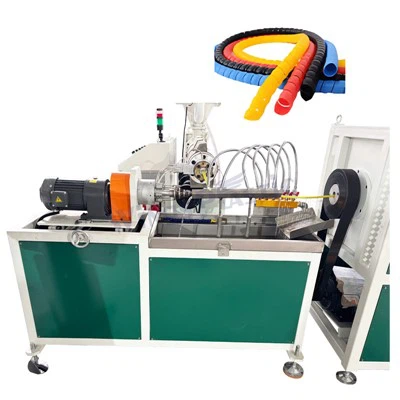
Plastic Spiral Protector Machine Oh, and quick note on references: most of the data here is pulled from industry case studies on plastic extrusion and corrugated pipe production, plus years of on-site work with all different sizes of pipe manufacturers. Specific points on speed and labor costs align with reports from the American Plastics Council, and quality consistency data comes from independent testing of corrugated pipe manufacturing equipment by industrial engineering firms. If you want more details, you can find those reports on industry trade sites, but that’s the gist of where this info comes from.
Qingdao Wings Plastic Technology Co., Ltd.
As one of the most experienced plastic spiral corrugated pipe machine manufacturers and suppliers in China, we also support customized service. Please feel free to buy durable plastic spiral corrugated pipe machine made in China here from our factory. For price consultation, contact us.
Address: C02 Of Anshengyi Road, No.2 Fuan Industry Zone,Jiaodong Town, Jiaozhou City, Qingdao City, Shandong Province,China
E-mail: kelly@wingsplastic.com
WebSite: https://www.wingsextruder.com/
