If you’ve ever held a durable kitchen utensil, a sleek architectural facade panel, or a chemical processing tank that withstands rust, corrosion, and heavy wear, there’s a good chance it started as a stainless steel coil. For 15 years, I’ve supplied these coils to manufacturers across food service, construction, and industrial sectors, and one question I get more than any other is: What actually happens to turn raw stainless steel into that perfectly uniform coil we ship out? It’s not just a matter of squeezing metal between rolls—this process blends metallurgy, precision engineering, and decades of refined practice to get every detail right. Today, I’m pulling back the curtain on how stainless steel coil is rolled, from molten metal to the ready-to-ship product, and why that process matters for every client I work with. Stainless Steel Coil

First, let’s start with the raw material, because stainless steel isn’t just plain steel—it’s an alloy, and its composition defines how it rolls. All stainless steels share a base of iron, plus a minimum of 10.5% chromium by weight, the element that forms that invisible, self-healing oxide layer that repels rust. Beyond chromium, we add nickel (for strength and corrosion resistance), molybdenum (for extra resistance to harsh chemicals, used in marine or medical parts), and sometimes manganese or titanium, depending on the grade: 304 is the common “general purpose” grade for kitchen gear, 316 for coastal or pharmaceutical applications, and 430 for low-magnetism interior trim. The alloy is melted in an electric arc furnace, where scrap stainless steel, flux, and alloying elements are heated to 2,800°F, the point where metal turns liquid. Next, it’s refined in a ladle furnace to adjust chemistry, remove impurities like sulfur, and scrub out any gas bubbles that would cause defects later. Then it’s cast into a solid slab—a thick, rectangular piece of metal that’s 7 to 12 inches thick and up to 6 feet wide—through continuous casting, a process that pumps molten steel into a water-cooled mold that solidifies it into a uniform slab without the gaps or inconsistencies of old batch casting methods.
That slab is the starting point for hot rolling, the first big step in turning it into a coil. Hot rolling happens when the slab is heated to around 2,200°F, still hot enough that stainless steel is soft and malleable, no longer brittle like cold metal. The heated slab moves through a series of large, heavy rolling mills—called roughing trains—each with pairs of hardened steel rolls that squeeze the slab thinner and narrower with every pass. At this stage, we’re reducing the slab’s thickness from 8 inches down to just a fraction of an inch, sometimes as low as 0.15 inches, in a matter of minutes. The key here is speed: the metal is still hot, so we have to keep rolling it before it cools too much, which would make it too hard to shape evenly. Once it reaches the target thickness, it’s cut into a long, continuous strip, and coiled up into a large, heavy hot-rolled coil. Don’t mistake this hot coil for the finished product, though: hot rolling leaves a dark, scaly oxide layer on the surface, and it’s less smooth, less uniform, and more prone to tiny defects than what we supply to clients. For most applications, we need the precision of cold rolling next.
Cold rolling is where the real transformation happens into the stainless steel coil you’d recognize. Unlike hot rolling, cold rolling is done at room temperature, which hardens the metal (called work hardening) and lets us get far tighter tolerances—down to thousandths of an inch, critical for things like precision automotive parts or thin-gauge kitchen sheet. The hot-rolled coil is first pickled: dipped in a mix of hot acid (usually nitric and hydrofluoric) to strip that dark oxide scale off the surface, so we’re working with a clean base metal. Then it’s fed through a cold rolling mill, a machine with smaller, precision-ground rolls (often made of chrome or cast iron, hardened to resist wear) that squeeze the strip between them, reducing its thickness by up to 50% in a single pass. We control the tension of the strip with massive reels on either end: as one reel pulls the steel through the mill, the other winds it up evenly, preventing wrinkles, tears, or uneven thickness that would ruin the coil. A big part of my job as a supplier is working with clients to specify cold rolling parameters: a coil for a food processing tank needs a smooth, defect-free surface, so we run it through a temper mill at the end of cold rolling—small, lightly loaded rolls that flatten any slight waviness and adjust the metal’s temper (hardness) to match what the client’s fabrication process needs. We can also roll the coil to a matte, brushed, or polished finish right here, before it’s coiled up.
Wait, but what about the grades that need extra corrosion resistance, like 316L (the “L” stands for low carbon, which prevents carbide buildup during welding)? That’s where annealing comes in, a critical step I can’t skip. After cold rolling, the metal is work-hardened—stiff, but also prone to cracking if bent or welded. Annealing heats the coil in a controlled, low-oxygen environment (usually a continuous annealing furnace, where it moves through a series of heating zones) to around 1,800°F, then slowly cools it. This relieves internal stress, restores the metal’s formability, and for grades like 304 and 316, it makes the chromium evenly distributed so that oxide layer is consistent across the entire surface. After annealing, we have to pickle again to remove any discoloration from the annealing process, and then we do a final pass: skin passing, a light cold reduction (just 1-2% thickness) to give the coil a uniform smoothness and prevent “roping”—those uneven, textured lines that can happen when stainless steel is formed later.
Once the coil is rolled to the exact specification a client ordered—thickness, width, grade, surface finish—it’s inspected and prepared for shipment. We run every coil through a precision thickness gauge, an ultrasonic machine that scans the entire length to ensure there are no thin spots, and a surface scanner that picks up tiny scratches, pits, or defects that would cause issues for a fabricator. Any coil that doesn’t meet our standards is sent back to be reprocessed; I’ve made it a rule over the years that I won’t send a coil that I wouldn’t use myself for a project. Then, the coils are wrapped in plastic film to protect them from scratches during transport, secured on pallets, and labeled with their grade, dimensions, and heat number—so if a client ever needs to trace a material quality issue, we can pull the exact batch records from our archives.
But here’s something a lot of people don’t realize: rolling stainless steel coil isn’t one-size-fits-all. A coil for a commercial dishwasher might be rolled to 0.025 inches thick, with a No. 4 brushed finish; a coil for a skyscraper’s curtain wall might be 0.125 inches thick, with a polished No. 8 finish; a coil for a chemical storage tank might be 316 grade, double polished, and resistant to saltwater. That’s why I work closely with clients long before any rolling happens: understanding their end use, their fabrication methods, and their durability needs helps me guide them to the right grade and rolling process. A common mistake I see new clients make is specifying a “cheaper” lower grade, not realizing that a small extra cost in the rolling and alloy process saves thousands in replacement costs later.
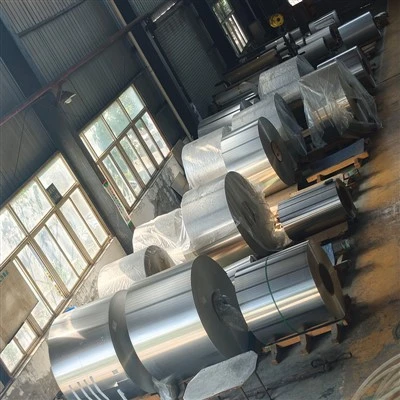
If you’re a manufacturer, fabricator, or architect who needs reliable, precision-rolled stainless steel coil for your next project, I’m here to help. Whether you need small quantities for a custom job or large runs for a mass production line, I can source the right grade, finish, and dimensions to meet your exact requirements. Reach out to me to discuss your project, and we can walk through every step to ensure you get a coil that performs as expected, every time.
Stainless Steel Sheet/Plate References
ASM International. (2020). Metallurgy of Stainless Steels. ASM Handbook Volume 4: Optical Microstructure, 10th Edition.
Cold Rolling Technology Association. (2021). Practical Guide to Cold Rolling Stainless Steel Coils. Industrial Metal Processing Series.
International Stainless Steel Forum. (2022). Stainless Steel Product Manufacturing Processes. World Stainless Steel Factbook.
Wuxi Jin Ming Jian De Industry & Trade Co., Ltd.
Wuxi Jin Ming Jian De Industry & Trade Co., Ltd. is one of the most professional stainless steel coil manufacturers and suppliers in China, also supports customized service. With abundant experience, we warmly welcome you to wholesale CE approved stainless steel coil in stock here from our factory. If you have any enquiry about quotation, please feel free to email us.
Address: 2102-2105, Yuexing Building, Guangnan Road, Liangxi District, Wuxi City, Jiangsu Province, China.
E-mail: info@wxjmjdss.com
WebSite: https://www.jmjdsteelexp.com/
