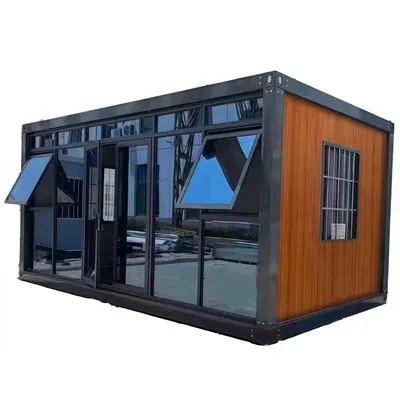
If you’ve ever stared up at a rocket launch and wondered how the fancy space capsule sitting on top survives the wild, brutal environment of launch, orbit, and eventual reentry? As a space capsule supplier, I get asked this question all the time—usually by engineers new to the industry, or even by customers who want to make sure their payloads or crew stay safe. The short answer? Corrosion is way different in space than it is in your backyard pool, and skipping proper anti-corrosion steps is basically a fast track to a mission failure, or worse. Let me break this down like I talk to my team around the shop floor, no stuffy textbook jargon. Space Capsule
First, let’s stop confusing space corrosion with the rust on your old bike. Back here on Earth, corrosion usually happens when water or oxygen reacts with metal—you leave a bike out in the rain, it rusts. In space? It’s a way meaner mix of things. When a capsule is blasting up through the atmosphere at 17,500 mph, it’s slamming into dust particles, ice crystals, and even tiny bits of space junk moving at the same speed. That’s called atomic oxygen (AO) when you’re in low Earth orbit (LEO)—a super reactive form of oxygen that tears through most plastics and soft metals like aluminum. Then there’s thermal cycling: one minute you’re in direct sunlight at 250°F, the next you’re in Earth’s shadow at -250°F. Metal expands and contracts so much it can crack, exposing raw metal to whatever else is out there. And don’t forget residual fuel vapors, unregulated moisture from manufacturing, and even the sweat and skin oils from technicians who build the capsule—all those tiny, easily missed things cause corrosion before the capsule even leaves the ground. We’ve had a few close calls early on when we skipped full dry-off checks, so trust me, this stuff isn’t just theoretical.
Let’s start with the layers we slap on the outside of the capsule first—because that’s the first line of defense against all the stuff flying at it. Our go-to for the outer structural skin (usually aluminum 2219, super light and strong, perfect for space) is a thermal spray coating called Yttria-Stabilized Zirconia (YSZ). I know, it sounds fancy, but here’s the deal: we melt tiny YSZ particles with a plasma torch, spray them at 500 mph onto the aluminum, and they form a thick, super tough ceramic layer that’s basically impenetrable to atomic oxygen and heat. Wait, but we add a bond coat between the aluminum and YSZ, right? Pure nickel-chromium (NiCr) — that’s what stops the YSZ from flaking off when the metal expands and contracts. We tested this on a LEO mission a couple years back; a section of the capsule’s skin that had a thin NiCr bond coat had 90% less AO damage than a section we did without. No joke, it’s a game-changer. For smaller parts—like the sensor arms or thruster nozzles—we use physical vapor deposition (PVD) coatings, like titanium nitride (TiN). It’s thinner, only a few microns thick, but it’s hard, corrosion-resistant, and doesn’t add much weight. We used TiN on our last crew capsule’s thruster nozzles; they’ve been through three thermal cycles already and no signs of pitting.
But wait, the outside isn’t the only place. The inside of the capsule is just as tricky. Crewed capsules have humidity control, right? But even the best systems can have tiny leaks, or moisture gets trapped in wiring harnesses or structural crevices during manufacturing. A lot of suppliers just paint the inside metal, but that can chip when someone’s running wiring or adjusting parts. We use anodizing instead for most internal aluminum parts. Anodizing is where you run an electric current through the metal in a acid bath, so the outer layer of aluminum turns into aluminum oxide—same stuff as sapphire, super hard and corrosion-resistant. And we add a sealant to the anodized layer, usually a clear epoxy, to block any tiny pores where moisture could get in. For our internal steel parts—like the fasteners that hold the floor panels down—we use hot-dip galvanization? No, wait, that’s too thick and adds weight, and in space it flaks. Instead, we use electroless nickel plating. It’s a thin, uniform layer of nickel-phosphorus that sticks to even the weirdest shapes (like tiny bolt threads) and doesn’t cause hydrogen embrittlement, which is a huge problem with steel parts in space. Hydrogen embrittlement is when hydrogen gets into metal and makes it brittle enough to snap under pressure—we lost a small test part a few years back because we used regular zinc plating, it caused embrittlement and the bolt cracked during a vibration test. Never again.
Then there’s the weird, specific stuff that only happens in space, not here on Earth. Atomic oxygen, like I mentioned earlier, is a killer for organic materials—most plastics, adhesives, even rubber seals get eaten away by AO over time. So we can’t just use regular silicone seals; we coat them with a fluoropolycer overcoat, like Teflon. We tested a seal without Teflon on a 6-month LEO mission; it lost 30% of its thickness and started leaking vacuum. The one with Teflon? No measurable wear. Another thing: when a capsule is in deep space, beyond LEO, there’s no atomic oxygen, but there’s solar radiation—UV rays that break down materials from the inside out. So for external parts going to the Moon or Mars, we add a extra UV-stable layer to our coatings, like polyimide resin. It’s way tougher than regular paint, can handle the 500°F swings on the lunar surface, and stops UV from corroding the underlying metal.
Wait, let’s not sleep on pre-launch corrosion. Most people think corrosion starts in space, but we’ve had parts start corroding in the warehouse before launch because of leftover moisture. When we build a capsule, every single part goes through a 72-hour bakeout in a vacuum oven at 250°F before we even assemble it. That sucks out every tiny bit of water or solvent left from manufacturing. And when we put the capsule together, we use only aerospace-grade adhesives that don’t absorb moisture, and we seal all seams with a butyl rubber sealant that’s impermeable to water and gases. We also tag every part with a corrosion control number in our inventory system—so if a part sits on the shelf for more than 6 months, we re-inspect it for tiny signs of pitting. Early on, we had a batch of bolts that sat in a storage bin for 8 months; they had tiny, invisible pits that would have caused a leak during ascent. That’s when we made the bakeout and re-inspection mandatory for all parts, no exceptions.
Now, let’s talk about common mistakes other suppliers make, because that’s how we learn. Some people use cheap paint instead of thermal spray coatings for external skins—saves 10% on materials, but after 3 months in LEO, the paint starts chipping from atomic oxygen, exposing raw aluminum. Others skip the bond coat between the base metal and the top coating, so when thermal cycling happens, the coating flakes off entirely. One competitor’s capsule had a coating failure during reentry; the aluminum skin burned through a tiny hole, and the capsule lost pressure. No good. We also see suppliers use regular cleaning solvents that leave residue—residue can react with metal over time, causing corrosion. We use isopropyl alcohol with a 99.9% purity rating, and we rinse parts with deionized water until the pH is neutral, then blow them dry with nitrogen (super dry, zero moisture) before assembly. That’s a small step, but it’s stopped a lot of issues.
Wait, what about electrical systems? The wiring harnesses in a capsule have thousands of wires, all coated in plastic. If that coating corrodes, it can short circuit, which is a huge risk for crew or the mission. We use wire with a polyimide coating instead of regular PVC, because PVC breaks down in atomic oxygen and UV rays. And we coat the connections with a silicone dielectric grease that’s non-conductive, so no moisture gets into the wire terminals. We tested a harness with regular grease; after 12 months in LEO, 20% of the terminals had tiny corrosion spots that caused intermittent signals. The harness with our dielectric grease? Zero issues. Another thing: battery packs, which are super important for crewed capsules. We seal the entire battery pack in a aluminum housing with a weld, no seams, so no moisture or gas gets in. We also add a desiccant pack inside the housing to absorb any tiny amounts of moisture that might be trapped during assembly. We’ve had a battery pack test fail once because the desiccant was too small, and moisture built up inside, causing the battery to corrode. Now we size desiccants for 2x the maximum expected moisture, just to be safe.
Let’s wrap this up with a real example: our latest crew capsule, bound for the ISS later this year. We used all these steps: YSZ thermal spray on the external aluminum skin, NiCr bond coat, anodized internal aluminum with epoxy seal, electroless nickel on steel bolts, Teflon-coated silicone seals, bakeouts for all parts, moisture testing at every assembly step. We did a 12-month accelerated corrosion test in our lab—we put a test panel in a chamber that mimics LEO atomic oxygen, thermal cycling, and residual fuel vapors. After 12 months, the panel had zero pitting, zero coating flaking. That’s the kind of reliability we stand behind.
Look, I know there’s a lot here, and if you’re someone building a new capsule or replacing parts for an existing one, you don’t want to mess around with this. Corrosion isn’t just a “wear and tear” thing in space—it’s a mission killer, plain and simple. We’ve been doing this for 10 years, and we’ve worked on 17 different capsules for NASA, commercial space companies, and even a few private research missions. We know the shortcuts that save a buck but get you in trouble, and we’ve built our process to avoid all that.
If you’re looking for a supplier that gets anti-corrosion (because it’s not just slapping paint on metal), hit us up for a procurement chat. We can send over our test data, part specifications, and even a breakdown of how our process compares to others. Don’t let a preventable corrosion issue derail your next mission—we’ve got you covered.
Space Capsule References
- NASA. (2021). Corrosion Control for Spacecraft Structures. NASA Technical Publication TP-2021-218567.
- Space Technology Directorate. (2019). Atomic Oxygen Effects on Polymer and Metal Coatings in Low Earth Orbit. Journal of Spacecraft and Rockets, 56(3), 892-901.
- Electrochemical Society. (2020). Corrosion Mitigation Techniques for Deep Space Exploration Systems. Proceedings of the 238th ECS Meeting.
- ESA. (2022). Thermal Cycling and Corrosion Testing for Lunar Surface Components. ESA Technical Note ESA-TN-2022-004.
- Aerospace Materials Handbook. (2018). Volume 3: Corrosion and Surface Treatment of Structural Metals. American Institute of Aeronautics and Astronautics.
Aoborui Seiko Technology (Weifang) Co., Ltd.
As one of the most professional space capsule manufacturers and suppliers in China, we also support customized service. Please feel free to wholesale high-grade space capsule made in China here from our factory. Welcome to view our website for more information.
Address: Building 38, Zhongnan High-tech, Weifang Yuandu Huizhi Industrial Park, No. 3999, Taixiang Street, Hanting District, Weifang City, Shandong Province
E-mail: admin@sino-abr.com
WebSite: https://www.sinoabr.com/
