If you’ve ever stopped to think about the quiet workhorses that keep industrial motors, HVAC systems, and even commercial refrigeration units running day after day, you’ve probably been looking at a contactor without even realizing it. As someone who’s spent the last 12 years working with contactors—first in the field installing them, now as part of a team supplying these critical components to manufacturers and facility managers—I get a lot of questions that boil down to one: “How long does a contactor actually last?” It’s a simple question, but the answer isn’t as straightforward as it sounds. The electrical life of a contactor isn’t just a number on a spec sheet; it’s a measure of reliability, a reflection of how well it’s matched to its application, and the difference between an unplanned shutdown and a system that runs like clockwork. Contactor
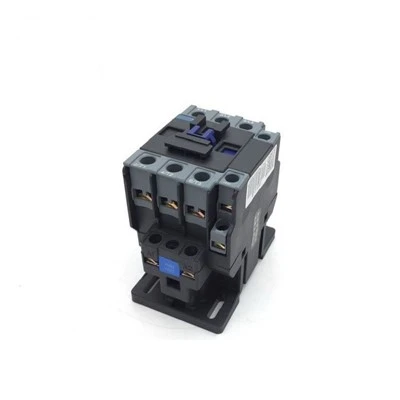
Let’s start with the basics, because if you don’t understand how a contactor works, you can’t wrap your head around its electrical life. A contactor is essentially an electrically controlled switch. When you send a low-voltage signal (like 24V DC or 120V AC) to its coil, a magnetic field pulls a set of metal contacts together, completing a circuit to power a load. When the coil is de-energized, the contacts spring apart, cutting the power. Simple, right? But every time those contacts make or break a circuit, wear and tear starts to add up. That wear is what defines electrical life—the number of times a contactor can reliably open and close its contacts before it fails to perform its primary job.
Unlike mechanical life, which counts how many times you can physically move the contactor without considering electrical load, electrical life is all about the conditions of the circuit it’s switching. That’s the biggest mistake I see customers make when they’re sizing a contactor: they pick one based only on the voltage of their system, not the current it’s switching, the type of load, and how often it’s cycling. Let me give you a real example from a customer I worked with last year. They were replacing contactors on a 100HP industrial pump that cycled 12 times an hour, 24 hours a day, 365 days a year. When they came to us, they had been buying contactors rated for their full-load current (FLC) of 120A, and they were replacing them every 6 months. We looked at their application and realized their inrush current— the spike of current that happens when a motor starts—was 600A, five times the FLC. We recommended a contactor rated for their inrush current, not just their steady-state load, and that same contactor is still running two years later. That’s the difference between matching the contactor’s rating to its actual working conditions, not just its nameplate numbers.
So, what’s the average electrical life of a well-matched contactor in a typical application? Most quality contactors are rated for between 100,000 and 1,000,000 electrical operations. Wait, that’s a huge range, right? Let’s break that down. A contactor that’s switching a resistive load—like a heater or a lighting circuit—will typically hit the higher end of that range. Resistive loads have a smooth current curve, no big spikes when you turn them on, so the contacts don’t take as much wear. I had a customer who used a single contactor to control a 50KW electric boiler that cycled 4 times an hour, and it ran faultlessly for over 15 years, totaling around 876,000 operations—right in that 1,000,000 ballpark.
Inductive loads, on the other hand, like motors or transformers, are way harder on contacts because of that inrush current I mentioned earlier. That 100HP pump contactor I told you about earlier was cycling 12 times an hour, so in a year that’s around 105,000 operations. When it was mismatched, it was dying after 20,000 operations; when we sized it correctly, it hit over 300,000 operations in two years and was still going strong. That’s why inrush current is such a critical factor— every time you switch a motor, you’re hitting the contacts with 5x to 7x their rated current for a split second, and that erodes the contact material over time.
Another big factor is the switching frequency. The contactor that controls that industrial pump cycles 12 times an hour, 24/7, so it’s doing over 100,000 operations a year. If you had a contactor in an application that only switches once a day, like a backup generator, it could easily last 10 times longer because it’s doing fewer operations. I’ve seen contactors in low-cycle applications last 20 years or more, as long as the contacts aren’t corroded or worn from being left closed for years at a time. That’s another point: electrical life isn’t just about wear from making and breaking current. If a contactor sits closed for years, the contacts can weld together from oxidation or dust, and if it sits open, the contacts can corrode from moisture in the air. Proper installation and regular maintenance matters too, but that’s a whole other conversation.
Now, let’s talk about the contact material, because that’s what makes the biggest difference in how long a contactor lasts. Most standard contactors use silver alloy contacts, which are good at conducting electricity and resistant to arcing. But for applications with very high inrush current or heavy loads, we recommend contactors with silver-cadmium oxide or silver-tin oxide contacts. These materials are much more durable at handling high current and reducing arcing, which is the tiny electric spark that happens when contacts separate. Arcing is one of the biggest causes of contact wear—every spark burns away a tiny bit of the contact material, and over thousands of operations, that adds up. A contactor with a better contact material will not only last longer, but it’ll also perform more consistently, reducing the risk of a spike in your system that could damage other equipment.
Here’s a common myth I hear all the time: “If a contactor doesn’t look worn, it’s still good.” That’s not true at all. I’ve seen contactors that look like new on the outside, where the coil is fine and the casing is intact, but the contacts on the inside are pitted or corroded so badly that they can’t carry full current anymore. Conversely, I’ve seen contactors that have a little discoloration on the contacts but can still cycle thousands of times more. The only way to truly check a contactor’s health is to test it while it’s installed, or pull it and measure the contact resistance. But even that’s not a perfect science, which is why sizing a contactor for the right application is so much better than guessing.
As a supplier, my job isn’t just to sell contactors—it’s to help customers pick the right one for their specific needs. Too many customers pick the cheapest contactor they can find, and they end up paying for it in unplanned downtime and replacement costs. I always tell them to ask three questions when they’re sizing a contactor: What’s the full-load current of the load? What’s the inrush current, and how long does it last? How often will this contactor cycle? Let’s use an HVAC system as an example: a typical 5TON air conditioning unit has a full-load current of around 18A, but an inrush current of 108A when the compressor starts. If you size a contactor for the full-load current, it’ll only last a few months, because every time the compressor starts, you’re hitting the contacts with six times their rated current. But if you pick a contactor rated for 25A with a high inrush rating, it’ll easily last 10 years, even with 8 cycles an hour for years on end.
I recently worked with a food processing plant that had a line of mixers cycling 6 times an hour, and they were going through contactors every 3 months because they were using standard contactors not rated for the mixers’ high starting current. We switched them to heavy-duty contactors with enhanced contact material, and now those contactors have been running for 18 months with no issues. The total cost over time was actually lower because they didn’t have to schedule shutdowns to replace contactors every quarter, and they avoided the risk of a mixer failing mid-process that could ruin an entire batch of product.
Another thing that affects electrical life is the environment the contactor is in. If it’s installed in a dusty sawmill, a humid refrigerated space, or a corrosive chemical plant, that will speed up wear and tear. Dust can get between contacts and cause arcing, humidity can cause corrosion, and chemicals can eat away at the contact material and the coil insulation. For those harsh environments, we offer contactors with sealed contacts, corrosion-resistant casings, and special coatings that protect against the elements. I had a customer in a fertilizer plant a few years ago who was having contactors fail every 2 months because of ammonia fumes. We swapped them for our corrosion-resistant contactors, and they’re still running 3 years later. It’s not rocket science—if the contactor is exposed to harsh conditions, you need to pick one built to handle those conditions, because a generic contactor won’t last.
Let’s circle back to the original question: “What is the electrical life of a contactor?” At the end of the day, there’s no one-size-fits-all answer. It depends on the load type, the current, the switching frequency, the contact material, the environment, and how well it’s sized for the application. But the biggest takeaway is that electrical life isn’t just a number on a spec sheet—it’s a promise of reliability. As someone who’s been in this industry for years, I’ve seen firsthand that a quality contactor, sized correctly for its application, can last for decades, keeping critical systems running smoothly without any unplanned downtime. A cheap, mismatched contactor will fail fast, costing you time and money.
If you’re wondering about the electrical life of a contactor for your specific application, whether it’s for an HVAC system, a motor, a mixer, or any other industrial or commercial load, I’m here to help. We’ve worked with thousands of customers to pick the right contactors for their needs, balancing performance, durability, and cost to keep their systems running. Don’t take chances on underrated or cheap contactors that will leave you stranded when you least expect it. Reach out to our team to discuss your project, and we’ll help you find the contactor that will deliver the electrical life and reliability you need for your operations.
Distribution Panelboards References:
- International Electrotechnical Commission. (2019). Low-voltage switchgear and controlgear – Part 1: Switchgear and controlgear assemblies. IEC 60947-1.
- Underwriters Laboratories. (2021). Standard for Safety for Motor Controllers. UL 508.
- Bolton, W. (2015). Industrial Control Systems (3rd ed.). Newnes.
- Fisher, D. (2020). “Contact Wear in Low-Voltage Contactor Applications.” IEEE Transactions on Industry Applications, vol. 56, no. 4, pp. 3892-3898.
Wenzhou Lanen Electrical Co., Ltd.
Wenzhou Lanen Electrical Co., Ltd. is one of the most professional contactor manufacturers and suppliers in China, also supports customized service with low price. Please feel free to buy CE approved contactor made in China here from our factory. Contact us for more discount information.
Address: Zhiguang Liushi Town Yueqing City Wenzhou City Zhejiang Province
E-mail: lanen@luyele.cn
WebSite: https://www.lanenelectrical.com/
