If you’ve ever received a fragile item shipped in a corrugated box only to open it and find the corners crushed, you know how frustrating that can be. As a corrugated box supplier who’s worked with everything from small e-commerce orders to large industrial shipments, I’ve seen first-hand how corner damage can eat into profits, upset customers, and even ruin carefully packed goods. The good news is that strengthening box corners isn’t just about using thicker material—it’s about understanding why corners fail, and applying practical, science-backed solutions that work for different shipping needs. Corrugated Box
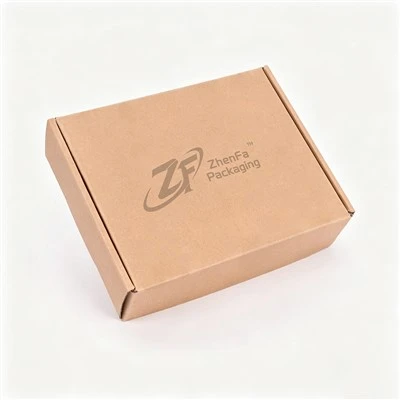
Corners are the most vulnerable part of a corrugated box for two main reasons: they’re where all the box’s structural panels meet, creating a concentration of stress during handling, stacking, or impact, and they’re exposed to the most physical force from forklifts, conveyor belts, and rough warehouse moves. When a box is dropped, for example, the corner hits the ground first, and that single point of contact can buckle the inner liner, crush the flutes, and compromise the entire box’s ability to protect its contents. Stacking weight on top of a pallet of boxes amplifies this stress too—corners often bear a disproportionate share of the load, especially if boxes are slightly misaligned on the pallet.
Over the 12 years I’ve been in the corrugated box business, I’ve worked with hundreds of clients to test and refine methods for strengthening corners, and the most effective approaches balance cost, functionality, and material efficiency. Below, I’ll break down the most proven strategies, explain the science behind why they work, and share common mistakes I see clients make when trying to reduce corner damage.
First, let’s talk about the basics: choosing the right corrugated board grade. It might seem obvious, but not all corrugated is created equal, and upgrading your board is one of the most reliable ways to boost corner strength. The three main types of corrugated board are single face, single wall, and double wall. Single wall, which is made of one layer of fluted corrugated medium between two liners, is standard for most retail shipping boxes, but it’s not tough enough for heavy items or long-distance transit. Double wall, with two layers of fluted medium and three liners, offers much higher compression strength and impact resistance—perfect for boxes holding items like glass, electronics, or industrial parts that need extra corner protection.
But it’s not just about thickness; the flute size matters too. Flutes are the wavy paper layers that give corrugated its strength, and they come in sizes from A (large, ~1/4 inch tall) to F (micro, ~1/16 inch tall). A-flutes are the most impact-resistant, making them ideal for corners that will face hard knocks, while B-flutes are stiffer and better for stacking. For most clients, a hybrid like B-flute combined with A-flute (known as AB-flute) gives the best of both worlds: the A-flute absorbs impact at the corners, and the B-flute adds structural rigidity for stacking. I always advise clients to match flute size to their specific use case—using A-flute for boxes that will be dropped or handled roughly, and B-flute if stacking is the main stress factor.
Another simple, science-backed fix is adding corner reinforcements to the box itself. These are small, durable pieces of material attached to the inner or outer corners of the box, and they distribute stress away from the corner point to a larger area, preventing buckling. There are a few types of reinforcements we use regularly: corner pads, corner wraps, and even reinforced corner locks. Corner pads are the most common—small squares of thick corrugated, sometimes coated with a water-resistant film, that you just glue or tape to each corner of the box. They’re cheap, easy to apply, and add a lot of extra impact resistance. For even more protection, corner wraps go a step further: they wrap partially around the sides of the box corner, covering both adjacent panels instead of just the end, which distributes stress over a wider surface area. We’ve seen clients reduce corner damage by up to 40% just by adding these wraps, with a minimal increase in material cost.
A mistake I see a lot of new clients make is applying reinforcements only to the outer corners, but inner corners matter too, especially for boxes that will hold heavy items. Inner corners are where the stacking load is concentrated, so reinforcing them prevents the box’s inner panels from pulling away or crushing when weight is applied. We often suggest double-corner reinforcements for heavy boxes—adding both outer corner pads and inner corner braces made of the same corrugated board as the box, to create a reinforced triangle of material at the corner. This is particularly effective for boxes used in palletized shipments, where stacking height can reach 10 or 12 boxes high.
Next, let’s talk about box design. Believe it or not, how a box is structured has a huge impact on its corner strength. The standard slotted container (RSC) is the most common box design, with flaps that fold over and meet in the middle. But for corners, a half-slotted container (HSC) or a full-overlapping slotted container (OSC) can be better. In an OSC, the flaps overlap completely, so the seam where the flaps meet runs the full length of the box, rather than stopping in the middle. This creates a stronger joint at the corners, because the adhesive or tape that seals the box is distributed over a longer area, instead of just at the midpoint. I’ve worked with clients who switched from RSC to OSC designs and saw a 25% drop in corner crush damage, without even upgrading their board grade.
Another design tweak is reinforcing the box’s edges with extra panels, often called “stiffening strips,” along the corner edges. These are thin strips of corrugated that are glued to the inside of the box’s corner edges, adding extra rigidity to prevent the flutes from collapsing. For custom boxes, we also add “corner guards” that are integrated into the box’s structure, rather than being added as an extra part. Custom die-cut boxes, for example, can have small tabs that lock into place at the corners, creating a reinforced joint that’s part of the box itself, no extra adhesive needed. This is especially useful for e-commerce brands that ship high volumes, because it speeds up packing time—no need to attach separate reinforcements.
Packing practices also play a big role in corner strength, and this is an area where suppliers and clients often collaborate to get the best results. Even the strongest box will fail if its contents are loose and shifting around during transit. When items shift, they put uneven stress on the corners, causing the box to bend or collapse. So, using internal packaging that fills the space at the corners is key. We recommend foam inserts, molded pulp, or even loose-fill packing peanuts that conform to the shape of the contents, filling the gap between the item and the box’s corner. For heavy items, it’s even better to use a custom insert that wraps around the entire base of the item, distributing the weight away from the corners to the center of the box.
I once had a client who was shipping ceramic mugs in standard RSC boxes, and they were losing 15% of their orders to corner damage. We worked with them to add corner pads to the boxes, use AB-flute double wall board, and adjust their packing to use custom molded pulp inserts that held each mug securely. Within three months, their damage rate dropped to 2%, and they saved money on returns and replacements. That’s the kind of small, targeted change that makes a big difference.
Another packing mistake to avoid is overfilling the box. If a box is so tight that its sides are bulging, the corners are under constant tension, which can cause the flutes to separate and the corner to weaken. A box should be filled so that the contents are secure but not pushing against the sides or corners—this allows the corrugated to flex slightly when hit, instead of being held rigidly and breaking. For clients shipping items that are fragile or have sharp edges, we also recommend adding a layer of cushioning paper or bubble wrap to the corners before sealing the box, adding an extra buffer that absorbs impact.
When it comes to long-distance transit, where boxes will be handled by multiple carriers and exposed to more stress, there are a few additional strategies that work. One is using stretch wrap to secure boxes to pallets, but not just any stretch wrap—using a wrap that covers the corners of each box, creating a layer of protection that wraps around the entire pallet. I always advise clients to wrap pallets in a crosshatch pattern, pulling the wrap tight enough to hold boxes in place but not so tight that it crushes the corners. A common mistake here is wrapping too tightly, which squeezes the corners of the boxes and can cause them to deform over long distances.
Another long-haul solution is adding pallet levelers or corner protectors at the pallet level. These are thick plastic or corrugated pieces that sit at the bottom corners of the pallet, protecting the first layer of boxes from being crushed by the weight of the boxes above. Even small items like these can add significant protection, especially for pallets that will be stacked high in a warehouse or sent on a truck with rough roads.
I also get asked a lot about recycling and sustainability, which is a big concern for many of our clients. The good news is that many of these strengthening strategies don’t require extra material that can’t be recycled. Corrugated corner pads and wraps are 100% recyclable, and upgrading to double wall AB-flute board is still recyclable, as long as it’s not coated with non-recyclable materials. We also work with clients to design boxes that are reinforced with minimal extra material, so they’re strong but still lightweight, which reduces shipping costs and environmental impact.
Over the years, I’ve seen clients try all kinds of fancy, high-tech solutions for strengthening corners, but the most effective ones are usually the simplest. You don’t need expensive additives or custom machinery—just matching the right board grade, adding targeted reinforcements, adjusting the box design, and improving packing practices. The key is to test different methods for your specific use case: if you’re shipping small items domestically, a single wall box with corner pads might be enough, but if you’re shipping heavy industrial items cross-country, you’ll need double wall board and integrated corner locks.

If you’re still dealing with corner damage in your shipments, you don’t have to figure it out alone. As a corrugated box supplier with decades of experience, I’ve helped dozens of clients reduce damage rates, cut return costs, and improve customer satisfaction by focusing on these corner strengthening strategies. Every business has unique needs, whether you’re an e-commerce brand, a manufacturer, or a retail chain, and I can work with you to design a solution that fits your budget and your shipping requirements. Don’t let damaged corners hold your business back—reach out to discuss your specific needs, and we can work together to strengthen your boxes, protect your goods, and save you money.
Paper Shopping Bags References
- Corrugated Packaging Design and Performance: A Guide for Manufacturers and Users, TAPPI Press, 2018
- “Corner Stress Distribution in Corrugated Boxes,” Journal of Packaging Technology, Vol. 12, No. 3, 2009
- The Corrugated Box Manual, American Forest & Paper Association, 2021
- Impact Resistance of Corrugated Corner Reinforcements, Packaging Science and Technology Conference Proceedings, 2019
Wenzhou Zhenfa Packaging Co., Ltd.
As one of the most professional corrugated box manufacturers and suppliers in China, we have world-leading production equipment and strong manufacturing capabilities. Please feel free to wholesale bulk advanced corrugated box in stock here from our factory. Also, quotation is available.
Address: Room 105, Building 10, Century Science and Technology Entrepreneurship Park, Longgang City, Wenzhou City, Zhejiang Province
E-mail: ZhenfaPackaging@outlook.com
WebSite: https://www.cnzhenfa.com/
