As a conveying equipment supplier, I spend most of my days talking to plant managers, production supervisors, and maintenance teams who are all dealing with the same tricky problem: energy bills that feel like they’re climbing faster than their production lines. Last week, I was on a call with a manager at a food processing plant in the Midwest—they were spending $120,000 a year on just their in-floor drag conveyors. “We know we’re wasting energy,” he said, “but we don’t know where to start.” That conversation stuck with me, because it’s not just his plant. Every production facility that uses conveying equipment is sitting on a potential goldmine of savings, and most don’t realize how simple, practical changes can add up fast. Conveying Equipment
I’m not going to stand here and give you a sales pitch that skips over the hard, day-to-day realities. I’ve been in this industry for 18 years, and I’ve seen all the mistakes: running conveyors at full speed when only half the line is loaded, ignoring minor belt slippage until it’s a major issue, and buying equipment that looks cheap upfront but burns through energy like it’s going out of style. The good news is, reducing conveying equipment energy use doesn’t require a complete overhaul of your production line. It’s about small, consistent adjustments and using the right tools to make informed decisions. Let’s walk through the steps that actually work, based on what I’ve seen plants implement and the hard numbers that come out of it.
First, and this is the most impactful change I’ve witnessed in 18 years: right-sizing your conveying equipment and matching its speed to actual production demand. I know, I know—when you’re installing a new line, the default is to buy the biggest, fastest conveyor you can afford, “just in case” production ramps up. But here’s the thing: oversized conveyors waste massive amounts of energy. Think about it: a conveyor that’s rated for 100 cases per minute, but you only need 40, is running at 40% of its capacity, but it’s still using almost 80% of the energy it uses at full speed. That’s not efficiency—that’s throwing money down the drain. I worked with a pharmaceutical packaging plant two years ago that had three 12-foot roller conveyors they’d installed 10 years prior. They were running each one at 50 feet per minute, even though their packaging line only needed 25 feet per minute. We worked with their team to adjust the speed using variable frequency drives (VFDs) on each conveyor, and within six months, their energy use for that section dropped 32%. That’s $18,000 a year in savings, just by turning down a dial.
VFDs are the key here, and I can’t say enough about how underused they are. A lot of plants still run conveyors at a fixed speed, regardless of what’s moving through them. When you use a conveyor at a constant speed when demand is variable, you’re not just wasting energy—you’re also causing unnecessary wear on belts, rollers, and motors, which leads to higher maintenance costs down the line. VFDs let you adjust the motor speed to match the exact load you’re moving, so when production is slow, the conveyor slows down, and when it’s at full capacity, it ramps up. For our company, we now build all new conveyors with VFDs as a standard feature, not an add-on, because we’ve seen time and again that it delivers the fastest return on investment. The payback period for adding VFDs to an existing conveyor? Usually 12 to 18 months, if that. It’s not a big investment, but it’s one that keeps giving.
Next, let’s talk about maintaining your equipment—and I mean the kind of consistent, proactive maintenance, not just fixing things when they break. I can’t tell you how many times I’ve seen a conveyor with a slightly misaligned belt that’s costing thousands in wasted energy. When a belt is off-center, it drags against the side of the conveyor frame, creating friction that the motor has to work extra hard to overcome. A belt that’s just ¼ inch out of alignment can increase energy use by 10 to 15%. That might not sound like much, but multiply that by a 24-hour operation, and that’s a huge cost over a year. Then there’s lubrication. Rollers, bearings, and chain drives that are low on lubrication add more friction, too. A single unlubricated roller can waste as much energy as a single incandescent light bulb, but imagine how many rollers are on a 50-foot conveyor. We worked with a automotive parts plant last year that had a 200-foot overhead conveyor with 400 rollers. 12 of them were completely dry, and when we lubricated them, their energy use dropped 11%. That’s $22,000 a year, just from lubricating a dozen rollers.
I also want to address something that a lot of maintenance teams brush off: cleaning the conveyor regularly. Dirt, dust, and product buildup on belts, rollers, and conveyor frames add weight and friction, which forces the motor to work harder. For bulk material conveyors, buildup can be even worse— I’ve seen a grain conveyor with 2 inches of caked-on grain on the belt that was using 25% more energy than a clean belt. That’s not just inefficient; it’s a safety hazard, too, because buildup can cause belt tears or derailments. Creating a simple weekly cleaning schedule—using compressed air for rollers, soft brushes for belts, and scraping excess product from frame edges—takes less than two hours a week for a 100-foot conveyor, and the energy savings are immediate.
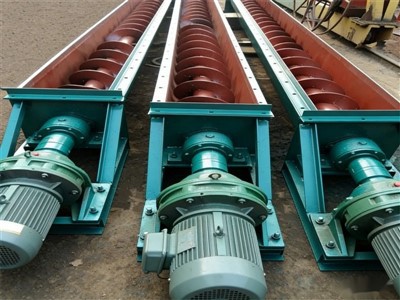
Another big area of energy waste is choosing the right type of conveyor for your specific application. I know when you’re buying new equipment, it’s tempting to go with the cheapest option, but that’s a short-sighted decision. Let’s take two common types of conveyors: belt conveyors and drag conveyors. For light, uniform products like packaged food, a well-designed belt conveyor is much more energy-efficient than a drag conveyor. But for heavy, bulk, or irregularly shaped products, a drag conveyor might be necessary—only if it’s sized correctly. Our company recently helped a mining plant replace their old screw conveyors, which were wasting 40% more energy than they needed to, with high-efficiency belt conveyors. The old screw conveyors had been around for 20 years, and they were built for a generic application, not the plant’s specific ore. The new belt conveyors had a low-tension design and were sized to handle exactly the ore volume they process, and within a year, their energy bills for that section dropped $45,000. That’s not a small number, and it’s all because they chose the right tool for the job.
We also see a lot of waste from overloading conveyors. I get it—when production is behind, it’s easy to pile extra product onto a conveyor to catch up. But overloading adds unnecessary weight, which increases the friction the motor has to overcome. A conveyor that’s loaded 20% beyond its capacity uses almost 30% more energy than one that’s loaded correctly. It also shortens the lifespan of the belt and rollers, leading to more breakdowns and more replacement costs. We recommend working with your production team to set clear loading limits, and if you regularly have periods of high demand, look at adding a secondary smaller conveyor for peak times instead of overloading your main line. That’s a better long-term investment than burning out your main equipment.
Don’t forget about the motors themselves. Most industrial conveying equipment uses AC induction motors, which are reliable, but they’re not always the most efficient option. If you have motors that are more than 10 years old, upgrading to high-efficiency motors can cut energy use by 10 to 15%. And if you’re using DC motors, switching to VFD-controlled AC motors gives you both the speed control benefits I mentioned earlier and higher efficiency. We recently worked with a packaging plant that had five old DC motors on their conveyor line; replacing them with high-efficiency AC motors with VFDs cut their energy use for those motors by 28%. The payback was just 10 months. It’s a small upgrade that makes a huge difference.
I also want to talk about something that a lot of plants overlook: system-level optimization, not just individual equipment. Conveying equipment doesn’t work in a vacuum—it’s part of a whole production line. If your conveyor is feeding a machine that’s sitting idle, that’s wasted energy on the conveyor. If one section of your line is running at full speed and another is slow, the conveyor between them is wasting energy waiting. We’ve done full line energy audits for clients where we adjusted the timing of conveyor speeds to match upstream and downstream processes, turned off conveyors during breaks or shift changes, and even re-routed conveyors to eliminate extra turns that added friction. One automotive plant we worked on had three connected conveyors that were running 24/7, even during lunch breaks and scheduled maintenance. We installed simple timer systems that cut power to the conveyors during non-production times, and added a speed control that syncs all three conveyors so they start and stop at the same time. Their annual energy savings? $52,000. That’s more than enough to cover the cost of the audit and the upgrades, and then some.
I know for a lot of plant managers, the fear of downtime is the biggest barrier to making these changes. No one wants to shut down a production line to install new equipment or adjust conveyors. That’s why all of these changes can be phased in, instead of being a one-time big project. Start small: check your belt alignment once a month, lubricate rollers every quarter, and test a VFD on one conveyor to see the results. You don’t have to do everything at once. I’ve seen plants that started with just cleaning their conveyors and adjusting belt alignment, and saved $10,000 in the first year, before even adding VFDs or upgrading motors. The key is to track your energy use, so you can see exactly what’s working. Most utility companies offer free energy audits for industrial facilities, and there are simple software tools that let you track conveyor energy use over time. You can’t improve what you don’t measure.
Here’s the thing I want you to take away from this: reducing energy consumption of conveying equipment isn’t about making big, scary investments. It’s about paying attention to the small, daily details, using the right tools for your specific application, and being willing to adjust what’s not working. Over the years, I’ve talked to hundreds of plant teams, and the ones that save the most energy are the ones that treat their conveying equipment like a partner, not just a piece of metal that moves product. They check the belts, lubricate the rollers, match the speed to the demand, and don’t just buy the cheapest option upfront.
Automated Farming Equipment If you’re tired of seeing your energy bills go up every year, and you want to find specific, actionable ways to save money on your conveying equipment, I’d encourage you to reach out. We work with facilities of all sizes, from small local operations to large national plants, to do on-site energy audits, recommend the right upgrades, and implement changes that fit your schedule and budget. We don’t push unnecessary equipment—we give honest advice, because at the end of the day, our business depends on your success. Whether you need to adjust your existing conveyors, upgrade to more efficient models, or just want to talk through what’s working for other plants like yours, we’re here to help. Don’t let another year of wasted energy and higher bills go by—let’s work together to make your conveying system as efficient as possible.
References
- Industrial Energy Efficiency Manual. U.S. Department of Energy, Industrial Technologies Program.
- Conveyor Belt Energy Efficiency Best Practices. Material Handling Industry of America.
- High-Efficiency Motors and Drives for Conveying Systems. Lawrence Berkeley National Laboratory.
- Proactive Maintenance Strategies for Reducing Conveyor Energy Loss. International Journal of Industrial Ergonomics, 2021.
- Variable Frequency Drives: Impact on Conveyor System Energy Use. Applied Energy Journal, 2019.
Henan Oumu Intelligent Storage Equipment Co., Ltd.
As one of the most professional conveying equipment manufacturers and suppliers in China, we’re featured by quality products and good service. Please rest assured to buy customized conveying equipment made in China here from our factory. For quotation, contact us now.
Address: No.681, Xinzhong Avenue, Hongqi District, Xinxiang City, Henan Province
E-mail: info@oumu-silo.com
WebSite: https://www.oumu-silo.com/
