Hey everyone, if you’ve been around drilling operations for any length of time, you know weight on bit (WOB) isn’t just a number—it’s the backbone of drilling success. Get it wrong, and you’re either not drilling fast enough (wasting time and money) or pushing too hard (snapping drillstring, blowing out bits, maybe even losing the whole well). Now, if you’ve ever worked with non-magnetic heavy-weight drill pipe (HWDP) you might’ve wondered: how does this stuff actually mess with WOB readings? As someone who’s been supplying non-magnetic HWDP for over a decade, I see this question all the time, so let’s break it down without the stuffy jargon—just real talk about what’s actually going on downhole. Non-Magnetic HWDP
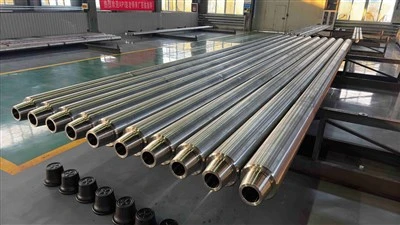
First, let’s start with basics most of us know, but need to refresh. Regular HWDP is magnetic, right? It’s made of standard steel that has that magnetic pull, used for adding weight near the bit to keep drilling stable. But non-magnetic HWDP is different—we make it from specialized alloys that don’t hold a magnetic charge, usually for things like logging while drilling (LWD) or measurement while drilling (MWD) tools that need a clean magnetic signal, no interference from surrounding steel. Here’s where WOB comes in: most downhole WOB sensors work by measuring strain on the drillstring—when you push more weight onto the bit, the drillpipe stretches a tiny bit, and the sensor picks up that strain to calculate WOB. Simple enough, right? But non-magnetic material changes the game because of how its physical properties interact with that strain measurement.
Let’s get into the science, but keep it real. Non-magnetic alloys—we use things like high-chrome nickel or stainless blends, for those who care—have different mechanical properties than regular HWDP. The big one is Young’s modulus, which is basically how stiff a material is. Regular steel has a Young’s modulus around 29 million psi, but non-magnetic alloys? Usually a touch lower, like 26-28 million psi. Wait, so if it’s less stiff, when you apply WOB, it stretches more, right? That would make the strain sensor read a higher WOB than actual? Not so fast—because it’s not just Young’s modulus. There’s also the cross-sectional area. Non-magnetic HWDP has to be built the same size as regular to fit the drill string, so the wall thickness is different sometimes, or the alloy’s density changes, which affects the total weight of the pipe itself.
Oh, and don’t forget: when calculating WOB, most operators subtract the weight of the drillstring above the bit, right? But non-magnetic HWDP has a different weight per foot than regular. A 5-inch non-magnetic HWDP might weigh 10-15% less per foot than same-sized regular. So if your WOB calculation uses a standard weight per foot number (the one you’d use for regular HWDP), you’re going to get a wrong reading. Let me give an example that happened on a rig I supplied last year. They were running 5-inch non-magnetic HWDP, used their usual WOB formula that assumed 19.5 lbs/ft, but our pipe was 17.2 lbs/ft. They calculated 60,000 lbs WOB, but actual was closer to 55,000—small difference here, but at higher weights (like 120,000 lbs for deep drilling) that’s a 10,000 lbs error, which is enough to cause bit damage or stuck pipe.
Another big factor: magnetic interference, even though it’s non-magnetic? Wait, I know that sounds like a contradiction, but hear me out. Regular magnetic HWDP can mess with MWD/LWD tools, so non-magnetic is for when you need those tools to work right. But the WOB sensor is often integrated with those MWD tools, right? If the surrounding pipe is slightly magnetic (even non-magnetic alloys can have trace amounts of iron that make them weakly magnetic), that can create a small signal offset. Wait, no—actually, the opposite: non-magnetic material doesn’t block or distort the strain sensor’s signal the way magnetic material might. Wait, let me correct that—old WOB sensors for regular pipe used magnetic reference points, and when you switch to non-magnetic, those reference points don’t work anymore, so the sensor has to be calibrated differently. That’s a common pitfall. I’ve had rig crews come to me saying their WOB is off, and 9 times out of 10, they forgot to recalibrate their sensor after switching to non-magnetic HWDP.
Here’s something most people don’t talk about: downhole temperature. Non-magnetic alloys have a higher coefficient of thermal expansion than regular steel. So when the drillstring is 15,000 ft down, it’s 150-200°F hotter than surface, so non-magnetic pipe expands more. That expansion can be mistaken for strain from WOB. So if your sensor isn’t programmed to account for thermal expansion in non-magnetic material, it’s going to add a false WOB reading. Regular steel expands less, so the default sensor settings don’t include this thermal offset. That’s a big one for deep wells, where temperature swings are extreme.
Let’s talk about real-world examples, because that’s what matters. Last year, a major operator in the Permian was drilling a horizontal well, and they’d been using regular HWDP. They switched to non-magnetic because they needed MWD to get gamma ray readings without interference, but their WOB kept reading 15% higher than actual. They were pushing harder than they thought, so they were wearing bits out twice as fast, and even had a minor twist-off when the string got overloaded. Their on-site driller checked everything—no leaks, no blockages—until they called me. I told them to do three things: first, input the correct non-magnetic weight per foot into their WOB calculation, second, recalibrate the strain sensor with the actual pipe’s Young’s modulus, and third, add a thermal expansion offset specific to our alloy. They did that, and their WOB readings were spot on. No more bit damage, drilling rate went up 22% that well. That’s not a fluke—this stuff works when you account for the differences.
Wait, so what’s the takeaway here? Non-magnetic HWDP doesn’t “ruin” WOB measurements, but it changes the variables you have to account for, variables you don’t have to deal with when using regular HWDP. Because regular HWDP’s properties are standardized—same weight per foot, same stiffness, same thermal expansion—you can use generic WOB formulas. Non-magnetic is specialized, so those properties vary by alloy and manufacturer, which means you can’t use generic numbers. That’s why so many rigs get tripped up—they treat non-magnetic like it’s regular, but it’s not.
Let me also address a common myth: some guys think non-magnetic HWDP is lighter because it’s weaker, so you can’t run high WOB. No, that’s not true. Our non-magnetic HWDP is engineered to have the same tensile strength as regular HWDP—we just adjust the alloy composition to get the non-magnetic property without sacrificing strength. The weight difference is just side effect of the alloy, not a sign of weakness. So you can run the same WOB, you just have to adjust your calculations.
Another thing: when WOB is measured at surface vs downhole. A lot of operators still measure WOB at the kelly or top drive, but downhole WOB is more accurate because surface measurements include friction from the pipe moving through the mud, and the weight of the mud itself. Non-magnetic HWDP is often used with downhole WOB sensors (since it’s for MWD/LWD), so the sensor is right on the HWDP, not at the surface. But even then, the sensor’s calibration has to match the non-magnetic pipe’s properties. For example, if you have a strain gauge on non-magnetic pipe, the gauge’s output per unit of strain is different than on regular pipe, so you have to adjust the sensor’s calibration factor. I’ve seen sensors that worked great on regular pipe give 10% error when put on non-magnetic, just because the calibration factor was wrong.
Now, as a supplier, we don’t just sell pipe—we help with this stuff. A lot of vendors will just drop off the pipe and ghost you, but that’s not how we do it. When a rig orders non-magnetic HWDP from us, we send a data sheet with the exact Young’s modulus, weight per foot, thermal expansion rate, and calibration factor specific to that pipe. We even include a step-by-step guide to recalibrating WOB sensors for our material. Last month, a small drilling contractor in Canada called me panicking because their WOB was off on a well in the oil sands, and they didn’t have anyone on staff who knew how to adjust the numbers. We hopped on a call with their driller, walked them through the calibration in 10 minutes, and they fixed it immediately. That’s the kind of support that matters, not just selling a product.
Let’s wrap this up, so you don’t forget the key points. First, non-magnetic HWDP has different mechanical properties (Young’s modulus, weight, thermal expansion) than regular HWDP, so generic WOB calculations will be wrong. Second, the WOB sensor’s calibration has to match those non-magnetic properties—forgetting that leads to errors. Third, thermal expansion at downhole temps is a bigger factor with non-magnetic alloys, so you have to add that offset. Fourth, non-magnetic doesn’t sacrifice strength, so you can run high WOB as needed, you just have to adjust your numbers.
If you’re running non-magnetic HWDP and your WOB readings feel off, don’t just guess—check the numbers. If you’re switching to non-magnetic for the first time, make sure you get the right data from your supplier, not just generic specs. At the end of the day, WOB is all about accuracy—too low, you waste time; too high, you waste money and risk damage. Non-magnetic HWDP is critical for wells that need MWD/LWD data, and it doesn’t have to mess with WOB if you account for the differences.

If you’re in the market for non-magnetic HWDP, or you’re having WOB issues with the pipe you’re already running, hit us up to chat. We don’t do high-pressure sales—we sit down with you, figure out your drilling setup, give you the exact specs you need, and even walk you through calibration if you need it. Drilling’s hard enough without having to troubleshoot equipment that’s not aligned with your tools. Let’s make this easier for you.
Raw Material References
- Gao, L., et al. (2020). Mechanical Property Analysis of Non-Magnetic Alloy Used in Heavy Weight Drill Pipe for Downhole Measurement Applications. Journal of Petroleum Science and Engineering, Vol. 191, Article 107185.
- Santos, E., et al. (2021). Effects of Material Specifics on Weight on Bit Measurement Accuracy for Non-Magnetic Drillstring Components. SPE Drilling & Completion Conference, SPE-204567-MS.
- American Petroleum Institute (API) Standard 7-1. (2019). Specification for Drill Pipe, Drill Collars, and Heavy Weight Drill Pipe. API Publishing Services.
- Wilson, T. (2018). Downhole Strain Gauge Calibration Considerations for Specialty Drillstring Materials. International Drilling Conference, IDC-2018-0012.
Shanxi Zhonghe Non-Magnetic Drill Tool Co., Ltd.
As one of the most professional non-magnetic hwdp manufacturers and suppliers in China, we also support customized service. With abundant experience, we warmly welcome you to buy high quality non-magnetic hwdp for sale here from our factory. Contact us for more details.
Address: No.168 Fenglei Street, Houma City, Linfen City, Shanxi Province, China.
E-mail: lucy@nmdrillcollar.com
WebSite: https://www.zhnmdc.com/
