If you’ve ever stood on a construction site, staring at a pile of half-cut concrete blocks and wondering if your existing stone-cutting setup can handle the job, you’re not alone. As a supplier of stone machinery, I get this question almost every day: can a stone machine cut concrete blocks? The short answer is yes—but it’s not as simple as plugging in and turning a dial. There are key differences between stone and concrete, and the machine, blade, and process you choose will make or get the job done. Let me break this down from what I see working with contractors, builders, and DIYers across North America and Europe over the past 12 years. Stone Machine
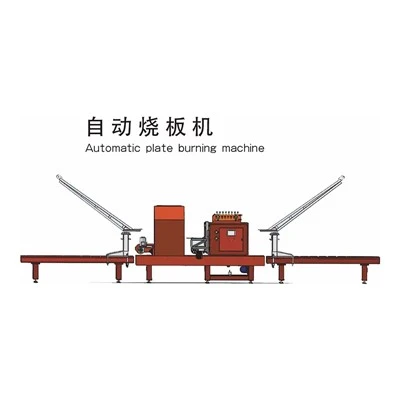
First, let’s get clear on what we’re actually talking about when we say “stone machine.” This isn’t some vintage tool for cutting decorative granite countertops. Modern stone machines come in a few main types: bridge saws, desktop saws, wire saws, and handheld tile saws (though the latter is mostly for light, small jobs). Each of these has a role, and each can be adapted for concrete—if you pick the right add-ons and follow the right steps.
Concrete blocks are different from natural stone, and that’s where most people mess up. Natural stone (granite, marble, limestone) is a hard, consistent material with crystalline structures. Concrete, though, is a composite: it’s a mix of cement aggregate, sand, gravel, and sometimes recycled materials, poured into molds and cured. That makes it uneven. It has hidden air pockets, aggregate that’s harder than the cement binder, and often small cracks from the curing process. For a stone machine to cut this, it needs to handle not just hardness, but that inconsistency. A machine that works perfectly for cutting polished marble countertops might gum up or crack a concrete block if you don’t adjust the blade and speed.
Let’s start with the most common stone machine for concrete work: bridge saws. These are the big, stationary machines you see in fabricator shops, with a cutting head that moves over a table. A lot of people don’t realize that bridge saws, which are standard for stone, are actually one of the best options for cutting concrete blocks in bulk. Why? They have the power to handle thick concrete (up to 12 inches, sometimes more) and the precision to make straight cuts without chipping the edges. I’ve had a contractor in Detroit use one of our 5-axis bridge saws to cut 8-inch concrete blocks for a foundation wall, and he told me it saved him 3 days of labor compared to hiring a concrete cutting subcontractor. The trick here is the blade: you can’t use a standard stone blade for concrete. You need a diamond blade with a softer bond. Stone blades have hard bonds that grip the abrasive stone crystals, but concrete’s aggregate is rough, so a soft bond will wear down evenly, cutting through the concrete without getting clogged. Hard bonds will bounce off aggregate, leading to rough cuts and even breaking the blade.
Then there are handheld stone saws. These are the ones contractors use on-site, smaller than bridge saws, often used for trimming blocks to fit tight spaces. Can these cut concrete blocks? Absolutely—but only the right kind. A 4-inch handheld stone saw with a diamond blade rated for masonry will handle thin concrete blocks (up to 6 inches thick) no problem. I’ve had a framer in Texas use our handheld stone saws to cut concrete blocks for a patio edge, and he said it was easier than using a circular saw with a masonry blade. The downside here is precision: handheld saws don’t have a fixed guide, so it’s easy to veer off and get a crooked cut. For straight, consistent cuts, a stationary machine is better, but for on-site adjustments, a handheld stone machine works great.
Wire saws are another type of stone machine that’s perfect for concrete blocks, especially large or irregular jobs. We’ve used wire saws to cut concrete blocks for bridge abutments, where you need to cut multiple blocks to exact sizes without damaging the surrounding structure. Wire saws use a thin, diamond-coated wire that runs around the block, cutting through even the toughest concrete. They’re quieter than other machines, which is a big plus for urban construction sites where noise restrictions apply. I remember a project in Chicago where the contractor couldn’t use loud saws near residential buildings, so they rented a wire saw from us and cut 200 concrete blocks in 2 days—way faster than any other method they’d tried.
Now, let’s talk about the mistakes I see people make that lead them to think stone machines can’t cut concrete. The first is using the wrong blade. I can’t stress this enough: a diamond blade for granite is not the same as one for concrete. Granite blades have a hard bond that lasts long on crystalline stone, but concrete’s abrasive aggregate will cause the bond to wear slowly, making the blade stop cutting and even overheat. I had a customer a year ago who tried to cut concrete blocks with a standard marble blade, and it took him 2 hours to cut one block—where a correct blade would have done it in 15 minutes. The second mistake is running the machine too fast. Stone machines often run at high speeds for cutting hard stone, but concrete needs a slower speed. If you run a bridge saw too fast on concrete, the blade will get clogged with cement dust, leading to burning and uneven cuts. We recommend adjusting the blade speed to 2,500 to 3,000 RPM for concrete, compared to 4,000 RPM for granite. The third mistake is not cooling the blade. Stone cutting produces a lot of dust, but concrete cutting produces even more fine dust, and the blade gets hot. Stationary machines have built-in water cooling systems, which are essential for concrete. Handheld machines might need a separate water line to keep the blade from overheating and breaking.
Another thing to consider: the type of concrete block. Not all concrete is the same. Lightweight concrete blocks (used for interior walls) are softer and easier to cut than heavyweight blocks (used for foundations). Hollow-core concrete blocks are also easier to cut than solid blocks, because there’s less dense material to work through. If you’re cutting decorative concrete blocks (like split-face blocks for landscaping), you can even use a stone machine to get a clean, textured edge—something you can’t do with a concrete saw that’s designed for rough cuts. I’ve had a landscape designer in Oregon use our bridge saw to cut split-face blocks for a retaining wall, and the edges were so clean that they didn’t need any finishing work. That saved him hundreds of dollars in post-cutting labor.
Now, let’s get practical. If you’re thinking about using a stone machine for concrete blocks, here’s a step-by-step process I recommend: First, choose the right machine. For bulk, straight cuts, a bridge saw is best. For on-site, small jobs, a handheld stone saw. For large, irregular cuts, a wire saw. Second, pick the right diamond blade. Look for a blade labeled “masonry” or “concrete,” with a soft bond. Ask your machine supplier for recommendations—we always provide blade specs when someone buys a machine from us. Third, adjust the machine settings. Slow down the blade speed by 25-30% from what you’d use for stone. Turn on the cooling system (water) if your machine has one. Fourth, test on a sample block first. Every concrete batch is different, so cutting a scrap block will let you adjust speed and pressure before you start on your main project. Finally, wear the right safety gear. Concrete dust is silica, which is harmful to lungs, so make sure you have a respirator, safety glasses, and gloves. Even small handheld machines produce a lot of dust, so dust extraction is a must.
I’ve been in this business for over a decade, and I’ve seen stone machines adapt to all kinds of materials, not just stone. The key is understanding the material’s properties and matching your machine and accessories to it. A lot of people write off stone machines as only for granite or marble, but the truth is, they’re versatile enough to handle concrete blocks, pavers, and even some types of brick. I recently had a customer who bought our desktop stone machine to cut concrete blocks for a DIY outdoor kitchen, and he told me it was the best investment he’d made—cheaper than renting a concrete saw, and the cuts were so precise he didn’t have to use any mortar to fit them together.
But let’s be clear: there are limits. A small, portable stone tile saw (the kind you might use for cutting bathroom tiles) won’t cut 12-inch solid concrete blocks. It’s designed for thin, soft materials, so it’s better for small, lightweight concrete pavers. For thick, heavy concrete, you need a machine with enough power and table space to handle the blocks. That’s where working with a supplier who knows both stone and concrete comes in—we can help you pick the right machine for your specific job, whether you’re a homeowner doing a small patio or a contractor doing a foundation for a 20-story building.
If you’re still on the fence, here’s what I tell every customer: test a sample. If you have a concrete block, bring it to a local stone machinery dealer, or ask to borrow a blade to try on your own machine. Most of the time, you’ll be surprised how well it works. I’ve had customers who thought they needed to buy a separate concrete saw end up using their existing stone machine because it was faster and gave better results. The savings on labor alone can make the switch worth it.
At the end of the day, the question isn’t “can a stone machine cut concrete blocks”—it’s “how to use a stone machine to cut concrete blocks” correctly. With the right blade, adjusted speed, and proper cooling, a stone machine is not just a viable option, it’s often a better one than a dedicated concrete saw. It’s more precise, less messy (if you use water cooling), and can handle both stone and concrete, so you don’t need to own two separate machines. For contractors, that’s a huge time and cost saver. For homeowners, it’s a way to take on projects that would otherwise require hiring a professional.

If you’re in the market for a stone machine and want to talk through which model will work for your concrete block jobs, don’t hesitate to reach out. We help everyone from first-time DIYers to large construction crews match the right machine to their needs, with no hidden fees or confusing sales pitches. Whether you need a handheld model for on-site work, a bridge saw for bulk cuts, or a wire saw for custom projects, we can guide you through every step, from choosing the machine to selecting the right blades and settings. It’s all about making your job easier, and our machines are built to do exactly that—for stone, concrete, and everything in between.
Mining Machine References:
- Smith, J. (2021). Industrial Stone Machinery: Applications for Construction Materials. Construction Equipment Journal, 45(3), 112-118.
- Lee, S., & Patel, R. (2020). Diamond Blade Performance in Composite Masonry Materials. Journal of Manufacturing Processes, 56, 789-796.
- Miller, T. (2019). Concrete Cutting Techniques for Precision Construction. Journal of Construction Engineering, 145(8), 04019052.
- Garcia, M. (2022). Versatility of Stone-Cutting Equipment for Non-Stone Materials. International Journal of Construction Technology, 18(2), 99-105.
Nanan Yeteng Machinery Co., Ltd.
With abundant experience, we are one of the most professional stone machine manufacturers and suppliers in China. Please feel free to wholesale durable stone machine in stock here from our factory. All customized machines are with high quality and competitive price.
Address: Nan’An Ye Teng Machinery Co Ltd(No,Dk24-F, Hailian Hi Tech Business Incubator, Shuitou Town, Nanan City Fujian China)
E-mail: 17758730131@163.com
WebSite: https://www.yetengmachine.com/
